About this visual
A visual digest of multi-hormone therapies, oral options, and amylin-based agents.
Sources & further reading
Original LinkedIn post and discussion ↗
Additional references appear in the infographic and the original LinkedIn discussion.
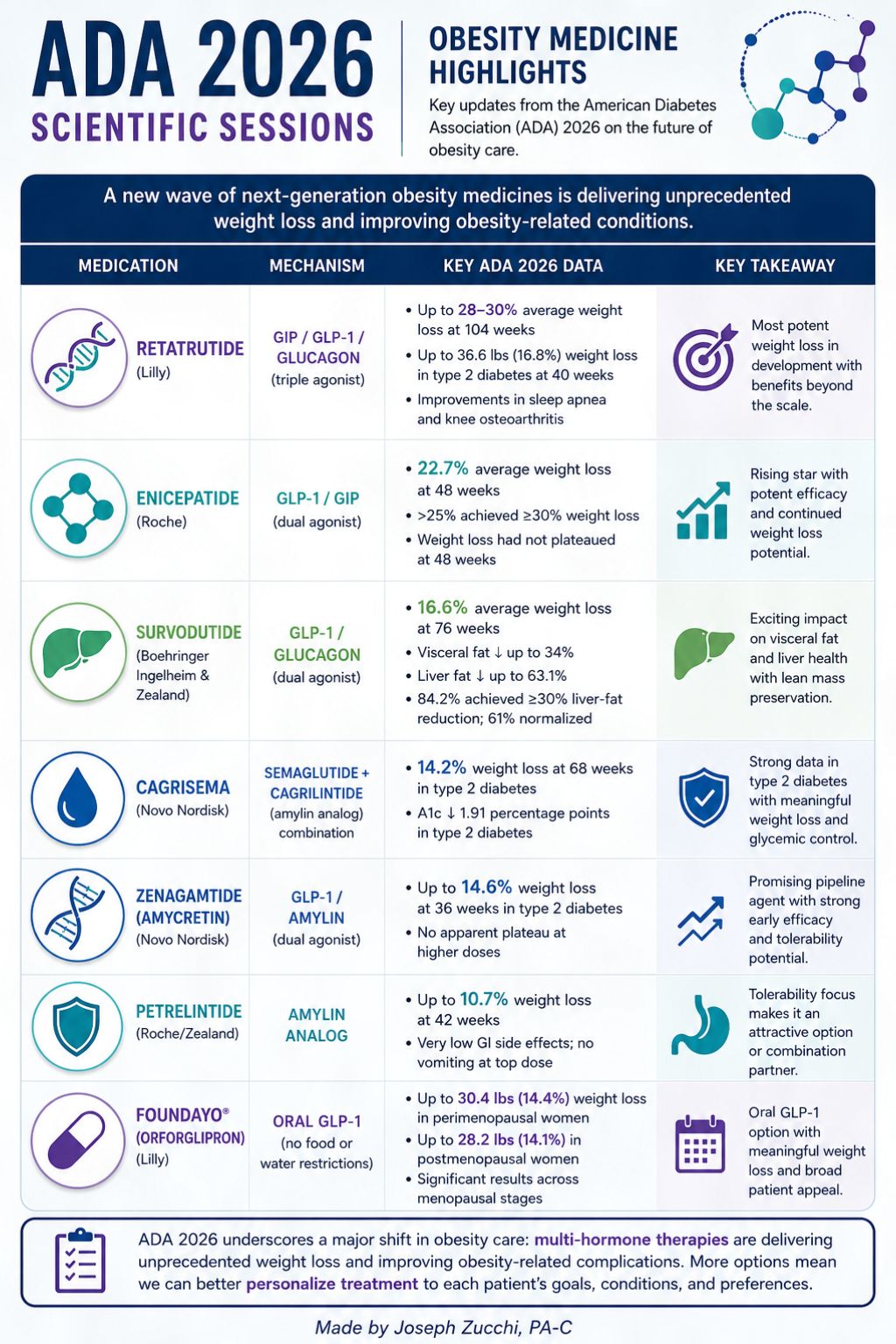
ADA 2026 made one thing clear: obesity medicine is moving fast.
We are no longer just talking about “GLP-1s.”
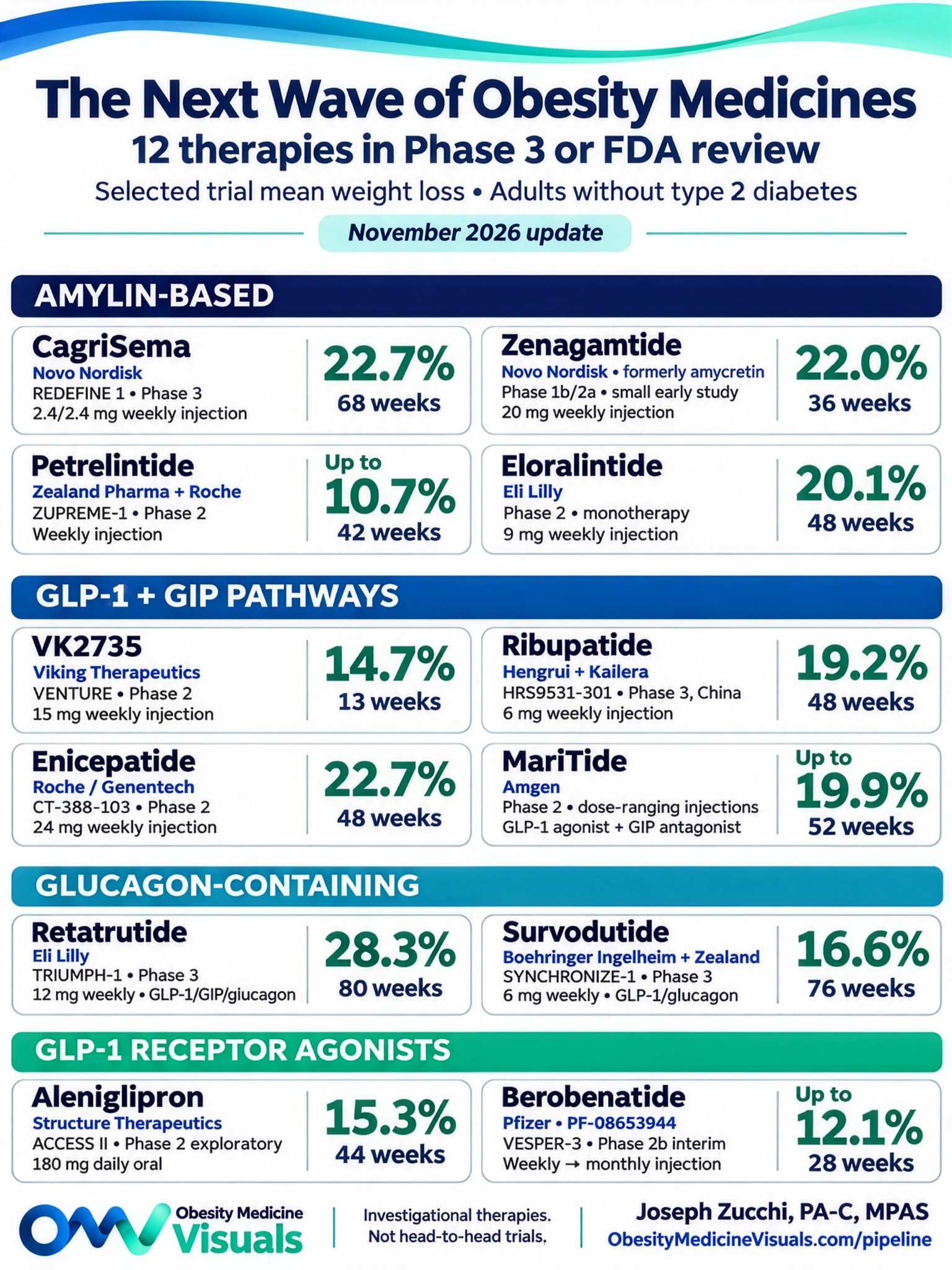
The future of obesity pharmacotherapy is moving toward multi-hormone therapies, oral options, amylin-based agents, and medications that may improve obesity-related complications beyond weight alone.
Some of the biggest updates included:
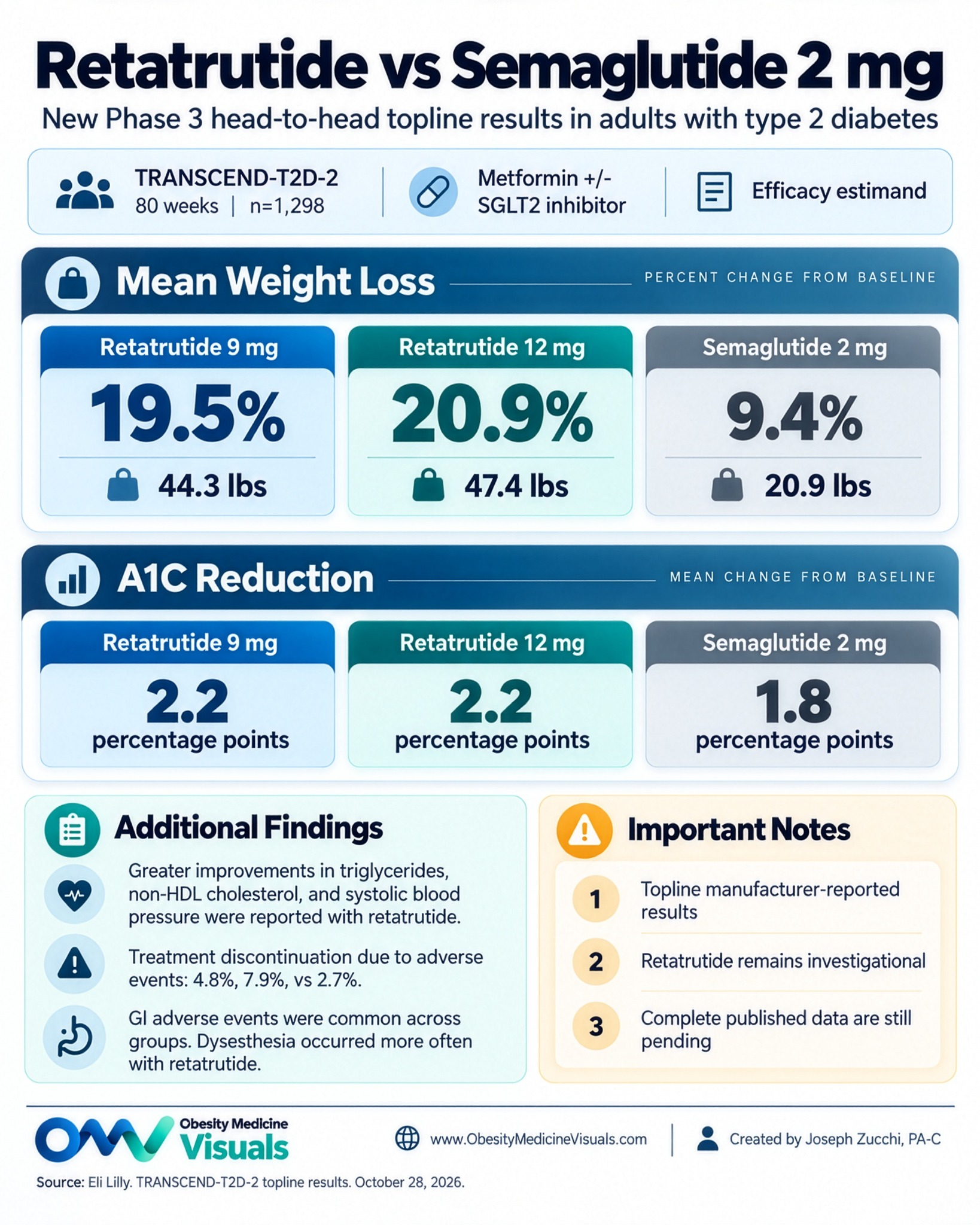
- Retatrutide (Eli Lilly and Company) showing weight loss approaching the high 20% to low 30% range in phase 3 obesity data.
- Enicepatide (Roche) producing 22.7% average weight loss at 48 weeks in phase 2 data, with weight loss still not plateauing.
- Survodutide (Boehringer Ingelheim) showing meaningful reductions in visceral fat and liver fat, with potential implications for MASLD and metabolic health.
- CagriSema (Novo Nordisk) continuing to show strong data in type 2 diabetes with both A1c reduction and weight loss.
- Zenagamtide (Amycretin) (Novo Nordisk), an investigational GLP-1/amylin agent, showing promising early results.
- Petrelintide (Zealand Pharma) highlighting the potential role of amylin-based therapy, particularly if tolerability remains favorable.
- Orforglipron/Foundayo (Eli Lilly and Company) reinforcing the future importance of oral GLP-1 options, especially for patients who prefer to avoid injections.
We are entering a new era where obesity treatment may become much more individualized. Weight loss, diabetes control, liver fat, visceral fat, sleep apnea, osteoarthritis, tolerability, patient preference, and long-term maintenance may all eventually factor into how we choose therapy.
I put together this ADA 2026 obesity-medication infographic to summarize some of the main headlines. What update from ADA stood out most to you?