About this visual
Explore amylin biology and clinical trial results for cagrilintide, CagriSema, petrelintide, zenagamtide (amycretin), and eloralintide in obesity medicine.
Explore related research
Read the CagriSema, petrelintide, zenagamtide, and eloralintide pipeline profiles, or explore hormone pathways.
Sources & further reading
Study source: REDEFINE 1, Garvey et al., NEJM ↗
Study source: REDEFINE 1 efficacy estimand results, Novo Nordisk ↗
Study source: ZUPREME-1 42-week results, Zealand Pharma ↗
Study source: Amycretin Phase 1b/2a, Lancet ↗
Study source: Eloralintide Phase 2, Lancet ↗
Study source: Eloralintide and EloraTZP Phase 2 results, Lilly ↗
Results are mean changes from baseline, not predictions for an individual. The REDEFINE 1 and eloralintide figures shown use efficacy estimands; other estimands can yield different results. ZUPREME-1 and EloraTZP sponsor reports should be interpreted in the context of available study details. Results across separate studies are not head-to-head comparisons.
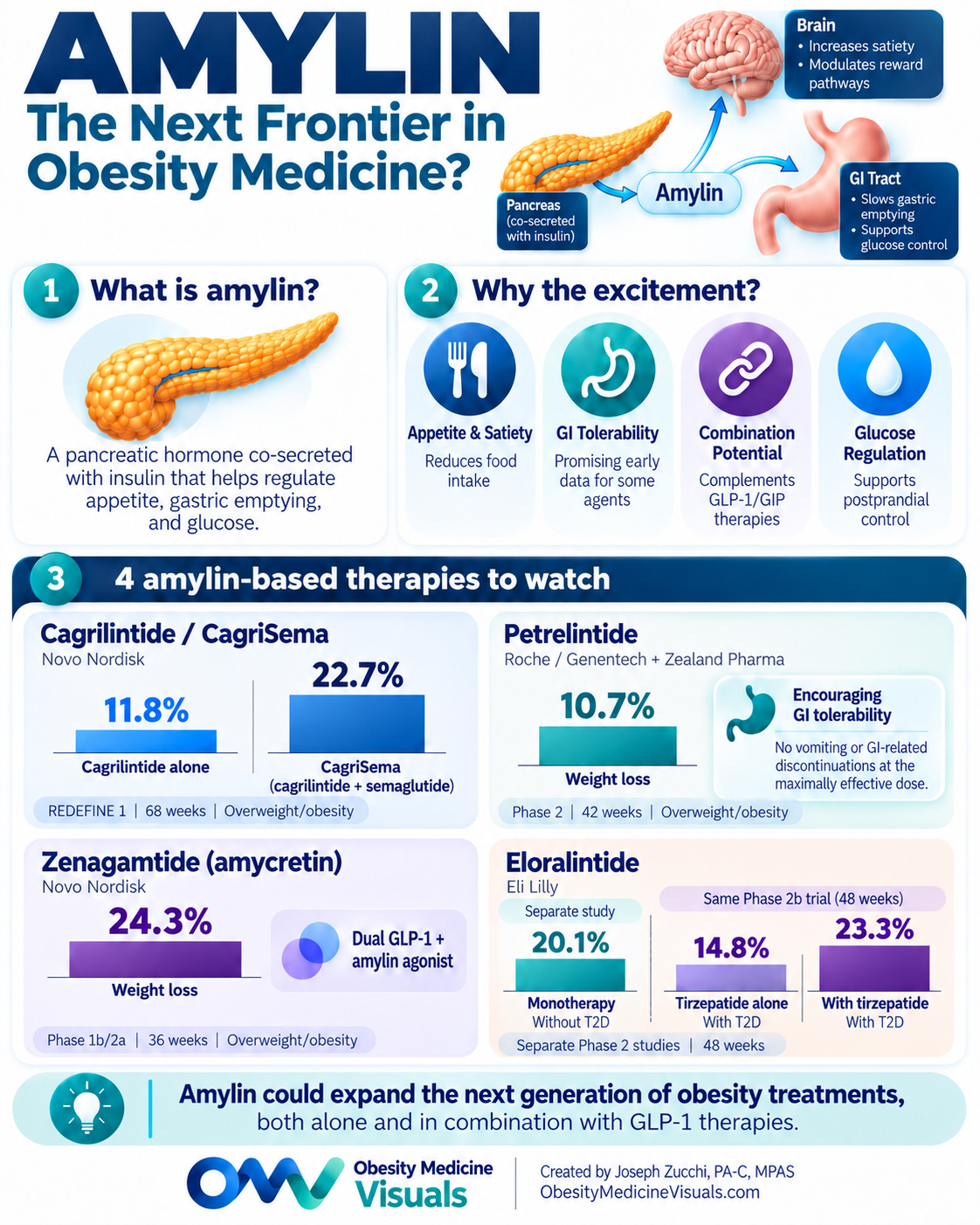
Amylin may be one of the most exciting developments in the next generation of obesity medications.
GLP-1 medications have transformed obesity treatment, but researchers are now exploring another hormonal pathway that could help take treatment even further.
Amylin is naturally released from the pancreas alongside insulin and plays an important role in appetite regulation, satiety, gastric emptying, and glucose control.
What's really exciting is that amylin-based therapies are being studied both on their own and in combination with GLP-1/GIP medications.
And the early results are impressive:
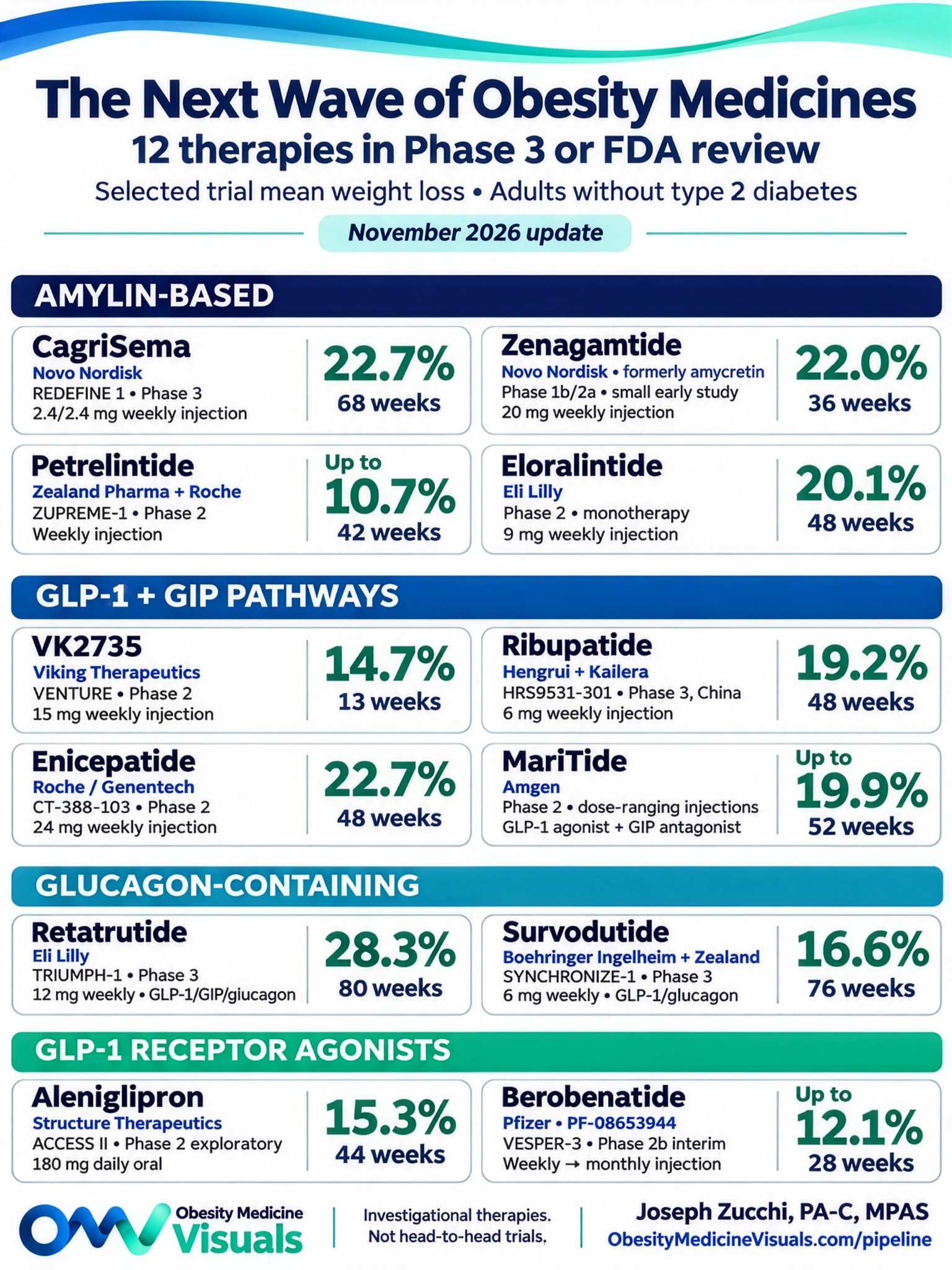
🔹 Cagrilintide / CagriSema (Novo Nordisk): 11.8% weight loss alone and 22.7% when combined with semaglutide as CagriSema over 68 weeks.
🔹 Petrelintide (Roche / Genentech / Zealand Pharma): Up to 10.7% weight loss at 42 weeks, with encouraging gastrointestinal tolerability findings.
🔹 Amycretin (zenagamtide) (Novo Nordisk): Up to 24.3% weight loss at 36 weeks in an early-phase obesity trial targeting both GLP-1 and amylin receptors.
🔹 Eloralintide (Eli Lilly and Company): Up to 20.1% weight loss as monotherapy in adults without diabetes, and 23.3% when combined with tirzepatide in a separate trial involving adults with type 2 diabetes.
That last result is especially interesting, considering that weight loss with obesity pharmacotherapy is often lower in populations with type 2 diabetes.
Of course, these are results from different clinical trials with different populations, durations, and study designs, so they shouldn't be interpreted as direct comparisons. These therapies remain investigational.
But the bigger picture is exciting. We're moving beyond targeting GLP-1 alone and exploring complementary pathways that may improve efficacy, expand treatment options, and potentially offer different tolerability profiles.
Amylin may become an important part of the future of obesity pharmacotherapy, both on its own and in combination with existing treatments.
I've put together this infographic highlighting the science and several of the leading amylin-based therapies in development.
#ObesityMedicine #Amylin #GLP1 #ObesityResearch