
About this visual
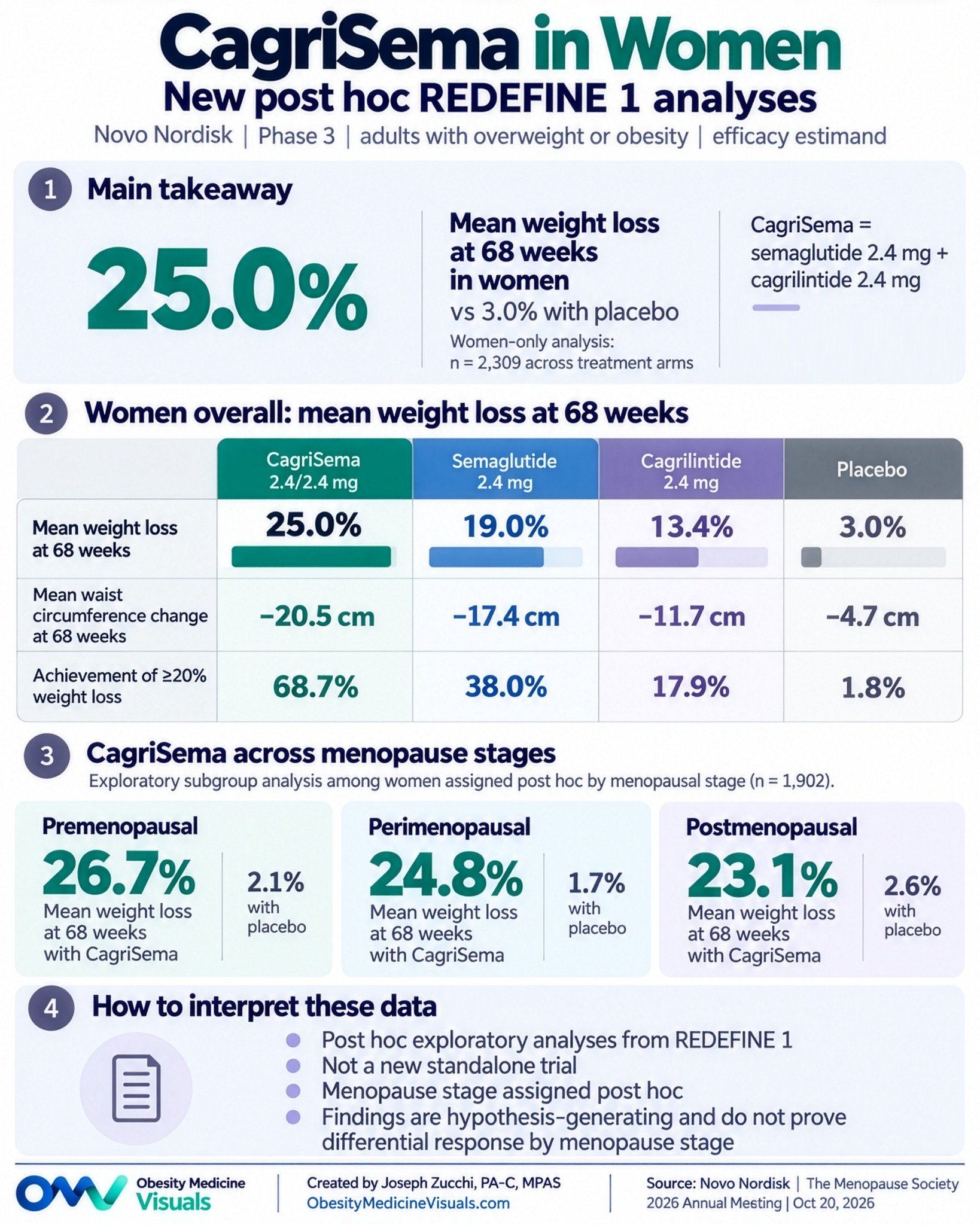
A visual summary of two post hoc analyses from the Phase 3 REDEFINE 1 trial reporting CagriSema weight-loss outcomes in women overall and across menopause stages.
How to read the evidence
REDEFINE 1 analyses in women
The company-reported efficacy-estimand results assume participants remained on treatment and did not use other weight-loss therapies. Menopause status was determined post hoc using age, medical history, and reported symptoms, not prospectively collected reproductive staging or biochemical confirmation. The exploratory analyses did not include formal treatment-by-subgroup interaction testing.
Novo Nordisk · October 20, 2026 ↗Sources & further reading
Primary source: Novo Nordisk — REDEFINE 1 post hoc analyses in women and across menopause stages ↗
Results are from post hoc analyses of one Phase 3 trial. The efficacy estimand assumes continued treatment and no other weight-loss therapies. Menopause categories were assigned after the fact, and the analyses do not show that response differs by menopause stage.
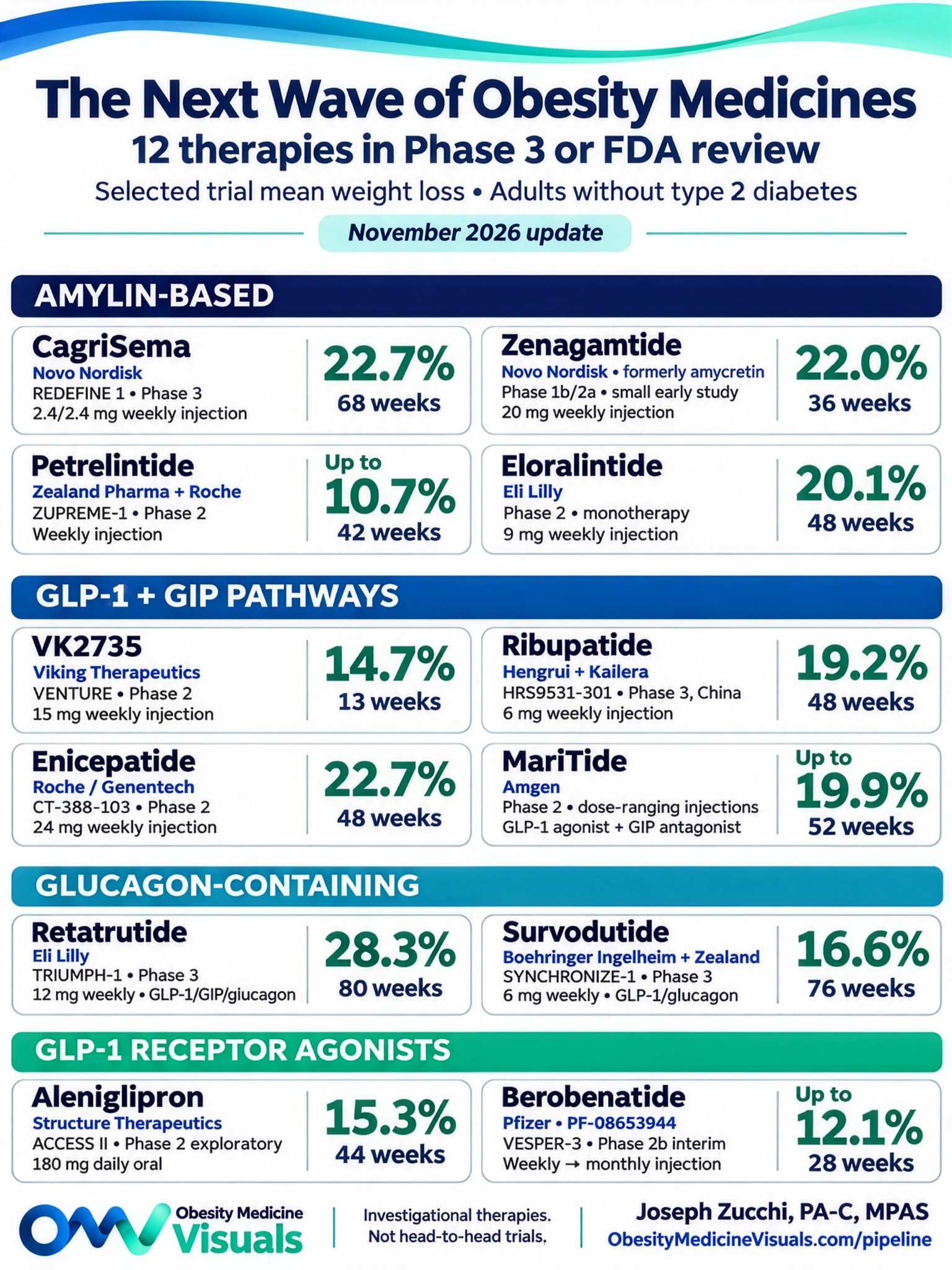
New CagriSema data: 25% mean weight loss in women, with impressive results across all stages of menopause!
On October 20, Novo Nordisk announced two new analyses from the Phase 3 REDEFINE 1 trial, presented at The Menopause Society's 2026 Annual Meeting.
CagriSema combines semaglutide (GLP-1) with cagrilintide (amylin), targeting two complementary pathways involved in appetite regulation and satiety.
Here's what the data showed:
🔹 In an analysis of 2,309 women with overweight or obesity, CagriSema achieved 25.0% mean weight loss at 68 weeks, compared with 3.0% for placebo.
🔹 A separate analysis looked at weight loss across different stages of menopause:
• Premenopausal: 26.7%
• Perimenopausal: 24.8%
• Postmenopausal: 23.1%
🔹 Nearly 69% of women receiving CagriSema achieved at least 20% weight loss.
🔹 Average waist circumference decreased by 20.5 cm (8.1 inches), compared with 4.7 cm for placebo.
Why does this matter? Menopause is associated with important changes in body composition, fat distribution, and cardiometabolic risk. Yet menopausal status is often overlooked in obesity medication research.
Seeing substantial weight loss across all three stages is encouraging, especially given the challenges many women face with weight management during and after menopause.
It's worth noting that these are post hoc analyses of the previously reported REDEFINE 1 trial, not new clinical trials. The findings are exploratory and don't establish that CagriSema works better in one menopausal group than another. The percentages reflect the efficacy estimand, assuming treatment adherence.
These findings add to the growing evidence supporting the potential of combining GLP-1 and amylin-based therapies.
Amylin is becoming one of the most exciting targets in obesity medicine, particularly when combined with GLP-1 therapies, and results like these show just how much potential this approach may have.
CagriSema remains investigational, with an FDA decision anticipated later this year.
Source: Novo Nordisk, October 20, 2026. REDEFINE 1 post hoc analyses presented at The Menopause Society Annual Meeting.
#ObesityMedicine #CagriSema #Menopause