About this visual
Reading an observational study in U.S. Veterans with type 2 diabetes.
Sources & further reading
Original LinkedIn post and discussion ↗
Additional references appear in the infographic and the original LinkedIn discussion.

Originally posted Mar 2026 · By Joe Zucchi, PA-C, MPAS
1280 × 698 px · PDF includes the original image and a link to this page.
Reading an observational study in U.S. Veterans with type 2 diabetes.
Original LinkedIn post and discussion ↗
Additional references appear in the infographic and the original LinkedIn discussion.
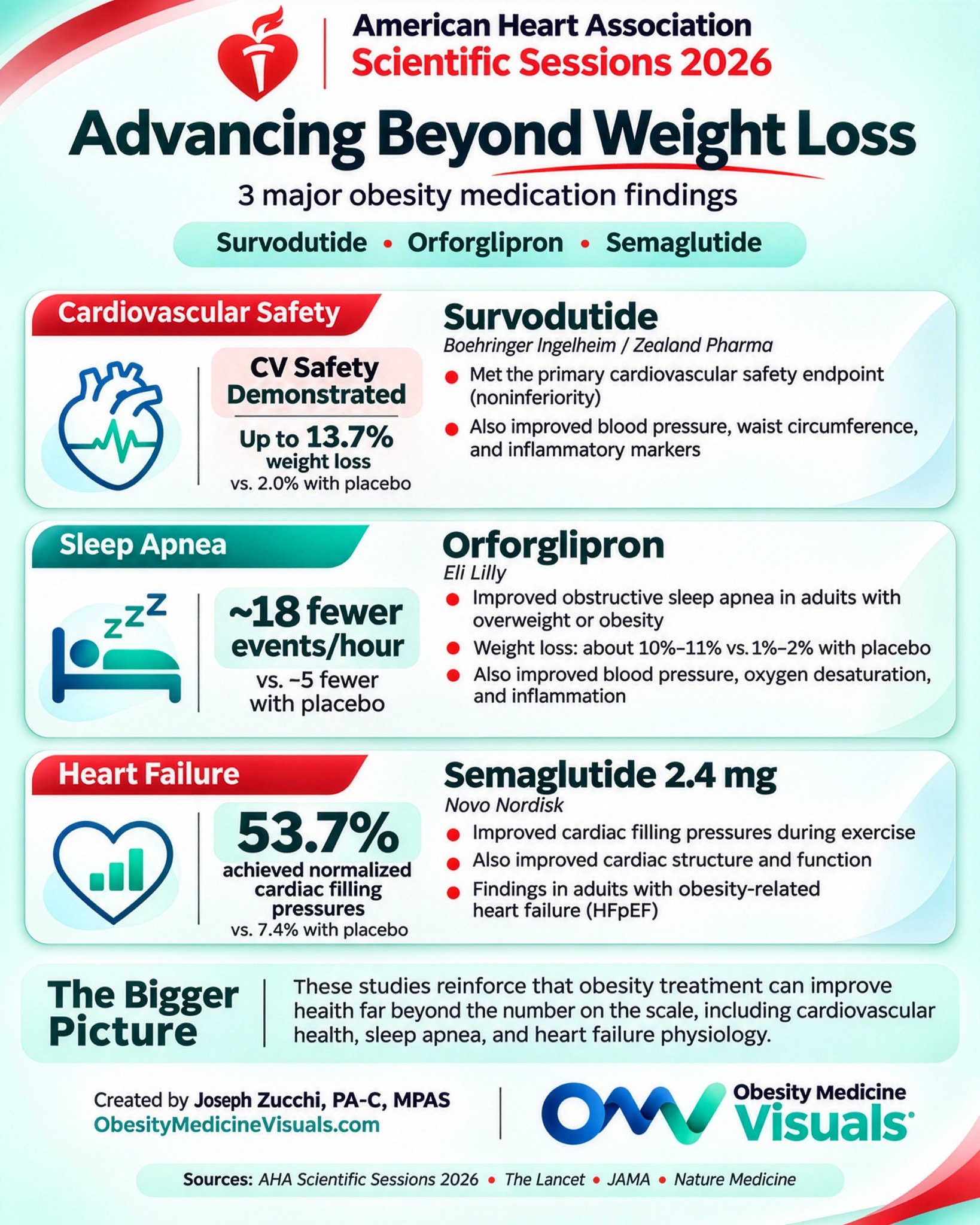
Three obesity medication findings from AHA Scientific Sessions 2026: survodutide and cardiovascular safety, orforglipron and sleep apnea, and semaglutide and obesity-related heart failure.
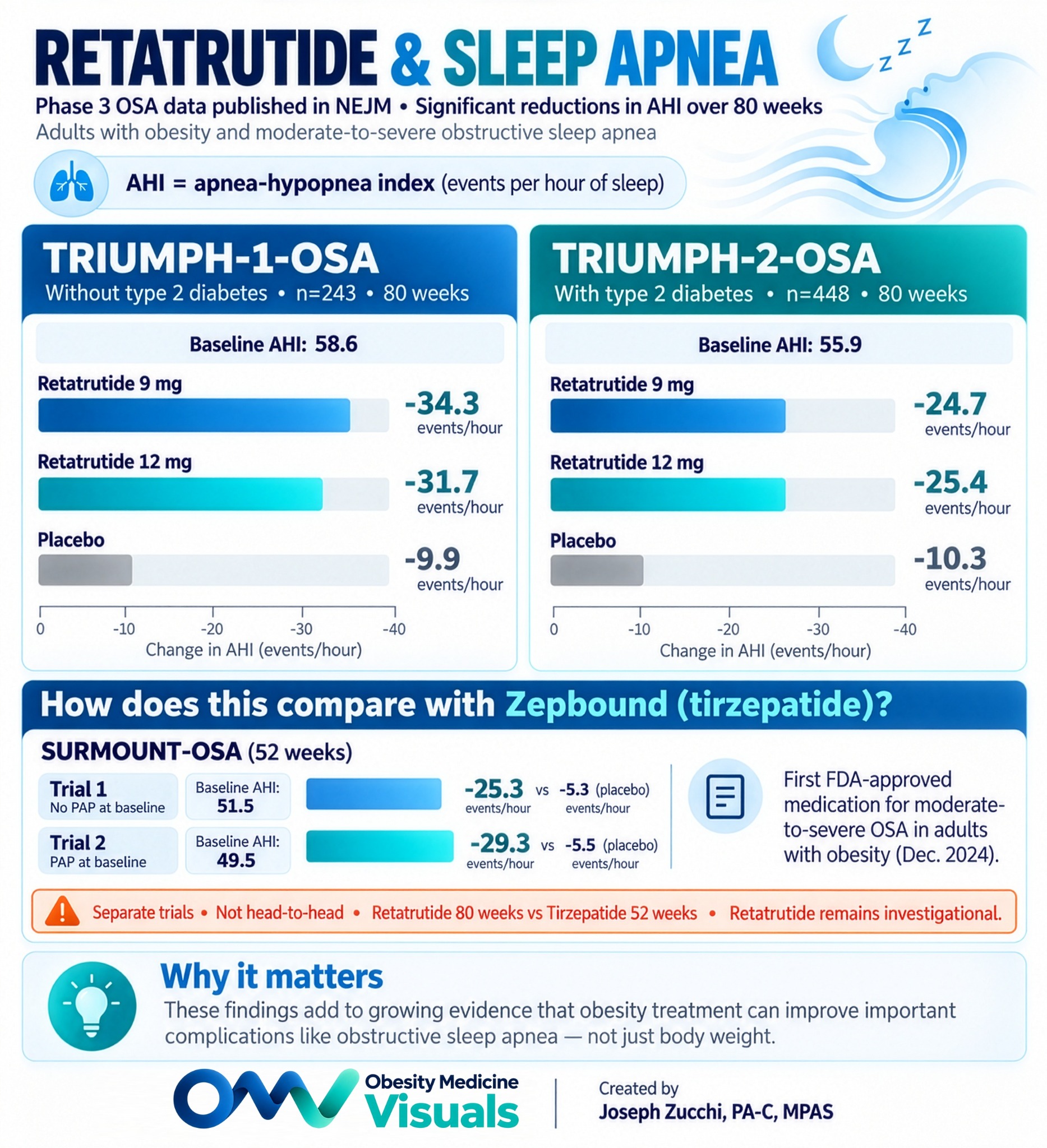
A visual summary of 80-week Phase 3 retatrutide results on apnea-hypopnea index in adults with obesity and moderate-to-severe obstructive sleep apnea, with and without type 2 diabetes.
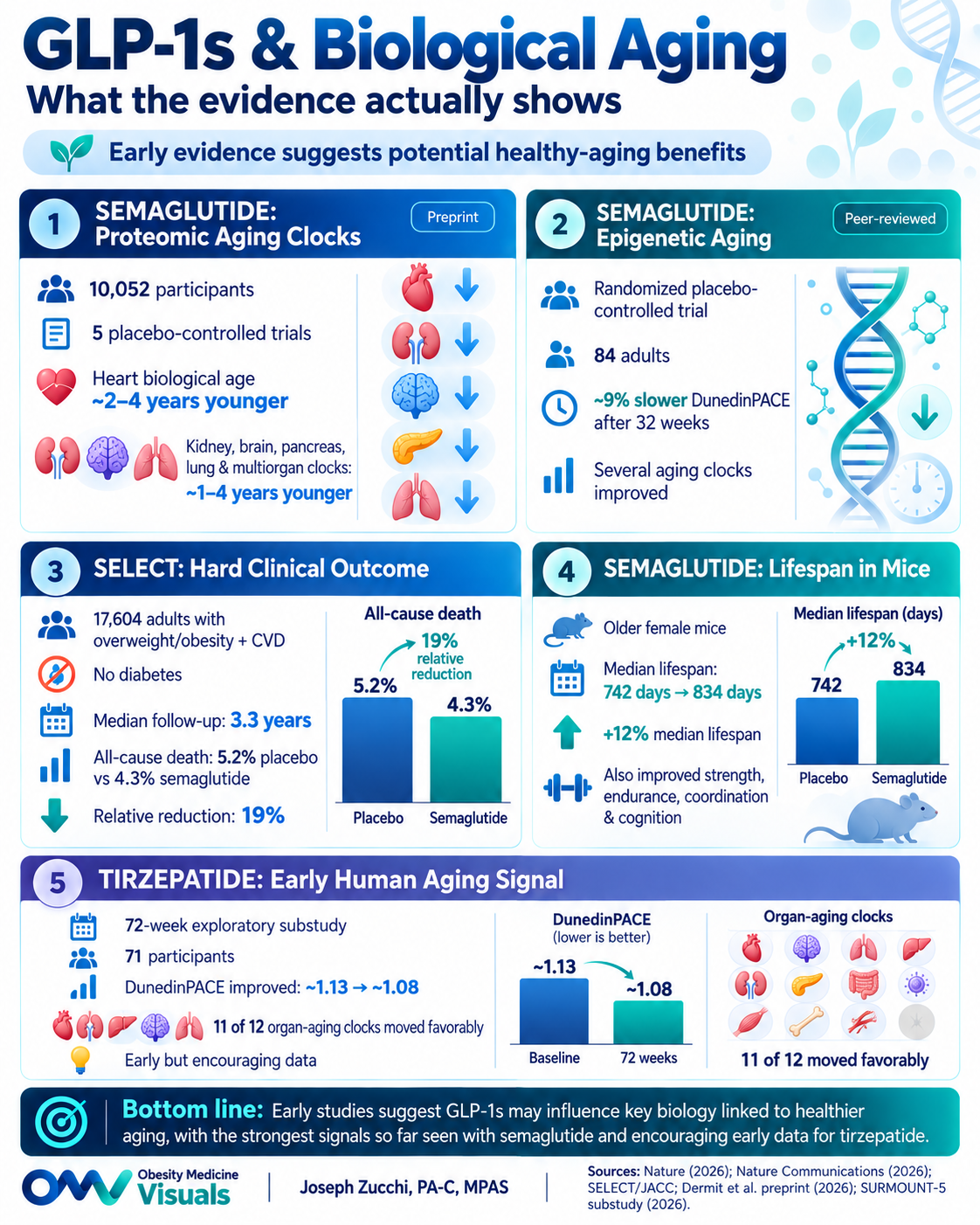
A visual look at semaglutide and tirzepatide aging research, from biological clocks to SELECT mortality and mouse lifespan, with the full LinkedIn post and study context.
Could GLP-1 medications help reduce addiction risk?
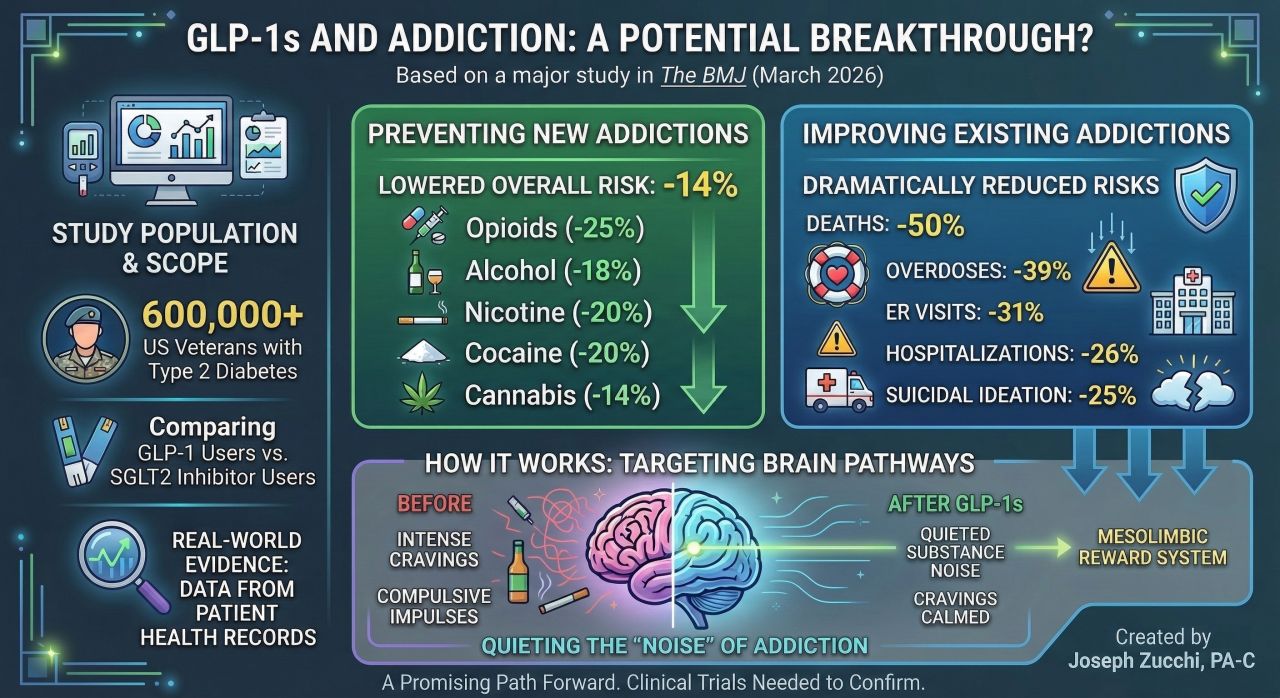
A new study in The BMJ looked at more than 600,000 U.S. Veterans with type 2 diabetes and reported lower risks of several substance use disorder outcomes among those starting a GLP-1 vs. an SGLT-2 inhibitor.
Over up to 3 years, GLP-1 initiation was associated with a lower risk of new substance use disorder diagnoses across multiple categories. Among Veterans with a pre-existing SUD, GLP-1 initiation was also associated with fewer serious outcomes such as SUD-related ER visits, hospitalizations, overdose, and SUD-related mortality.
Note that this is observational data, so it shows association, not proof of causation. And the population was Veterans with type 2 diabetes, so generalizing it to other groups is still an open question. Also, the relative risk reductions are meaningful, while absolute risk differences vary by outcome.
Still, this is an optimistic signal and it supports the idea that GLP-1s may have effects that extend beyond weight and glycemic control. Now we need well-designed randomized trials.
Check out my infographic for a summary of the findings from the paper.