About this visual
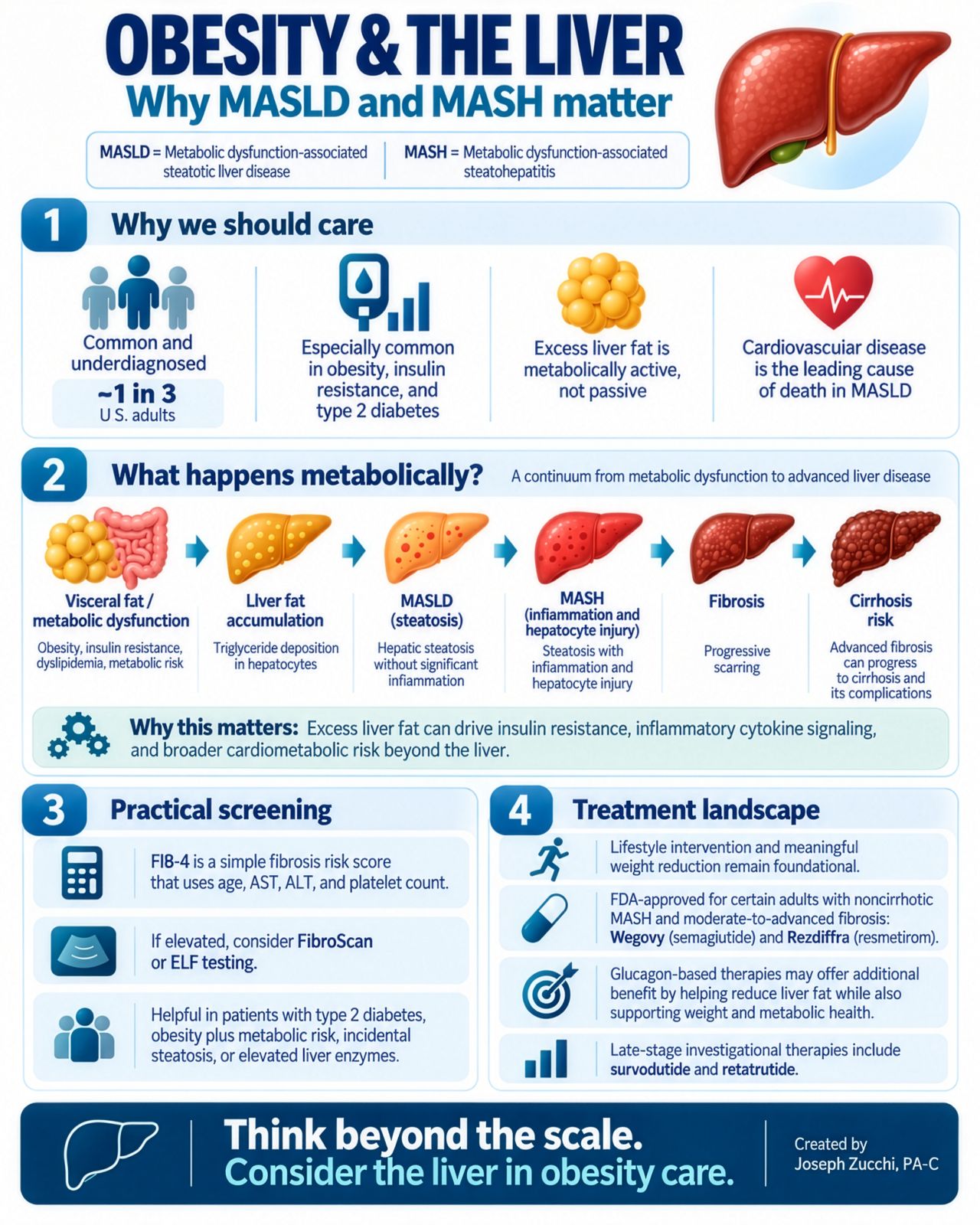
Connecting adipose tissue, metabolic health, MASLD, and MASH.
Sources & further reading
Original LinkedIn post and discussion ↗
Additional references appear in the infographic and the original LinkedIn discussion.

Originally posted Sep 2026 · By Joe Zucchi, PA-C, MPAS
1280 × 1600 px · PDF includes the original image and a link to this page.
Connecting adipose tissue, metabolic health, MASLD, and MASH.
Original LinkedIn post and discussion ↗
Additional references appear in the infographic and the original LinkedIn discussion.
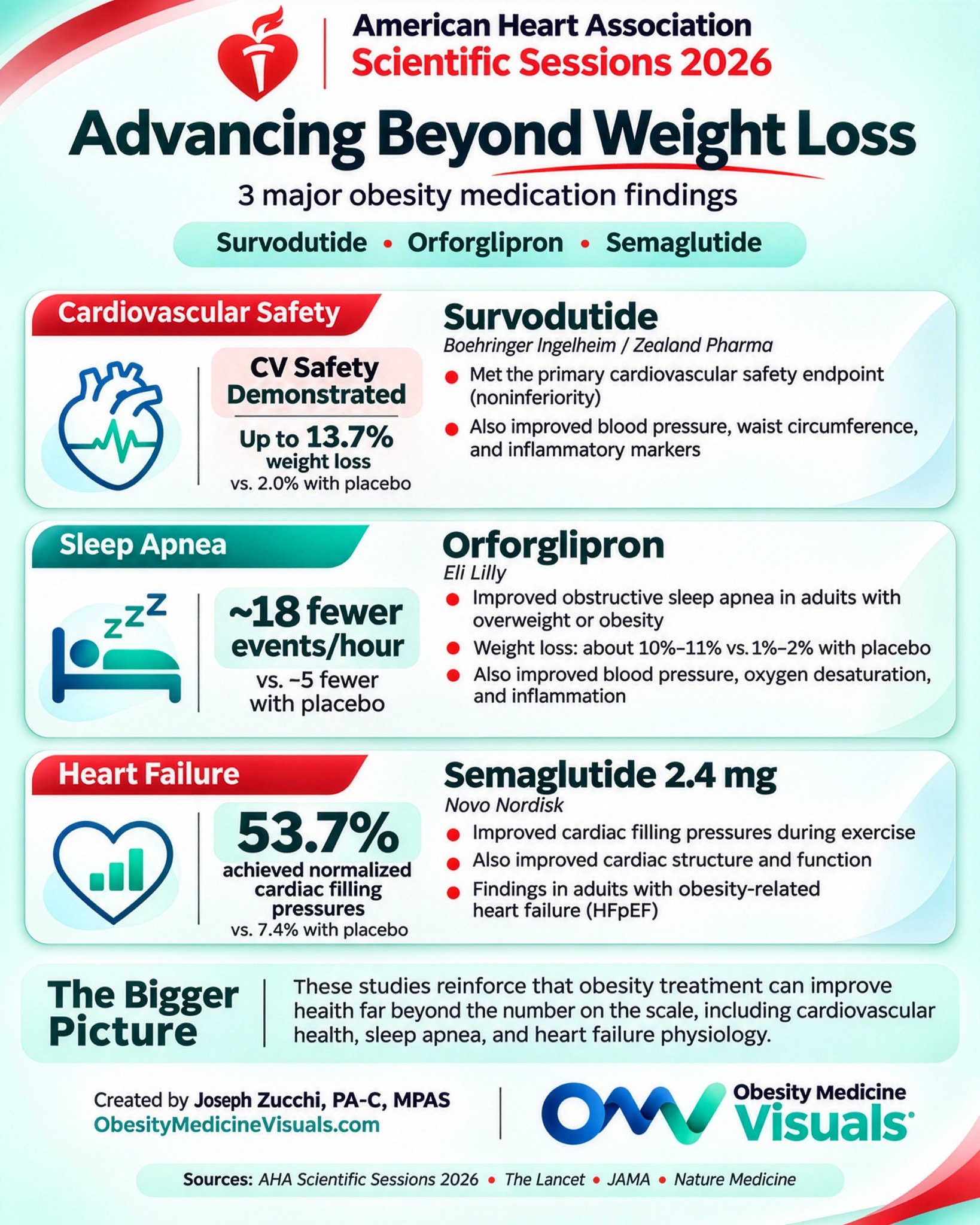
Three obesity medication findings from AHA Scientific Sessions 2026: survodutide and cardiovascular safety, orforglipron and sleep apnea, and semaglutide and obesity-related heart failure.
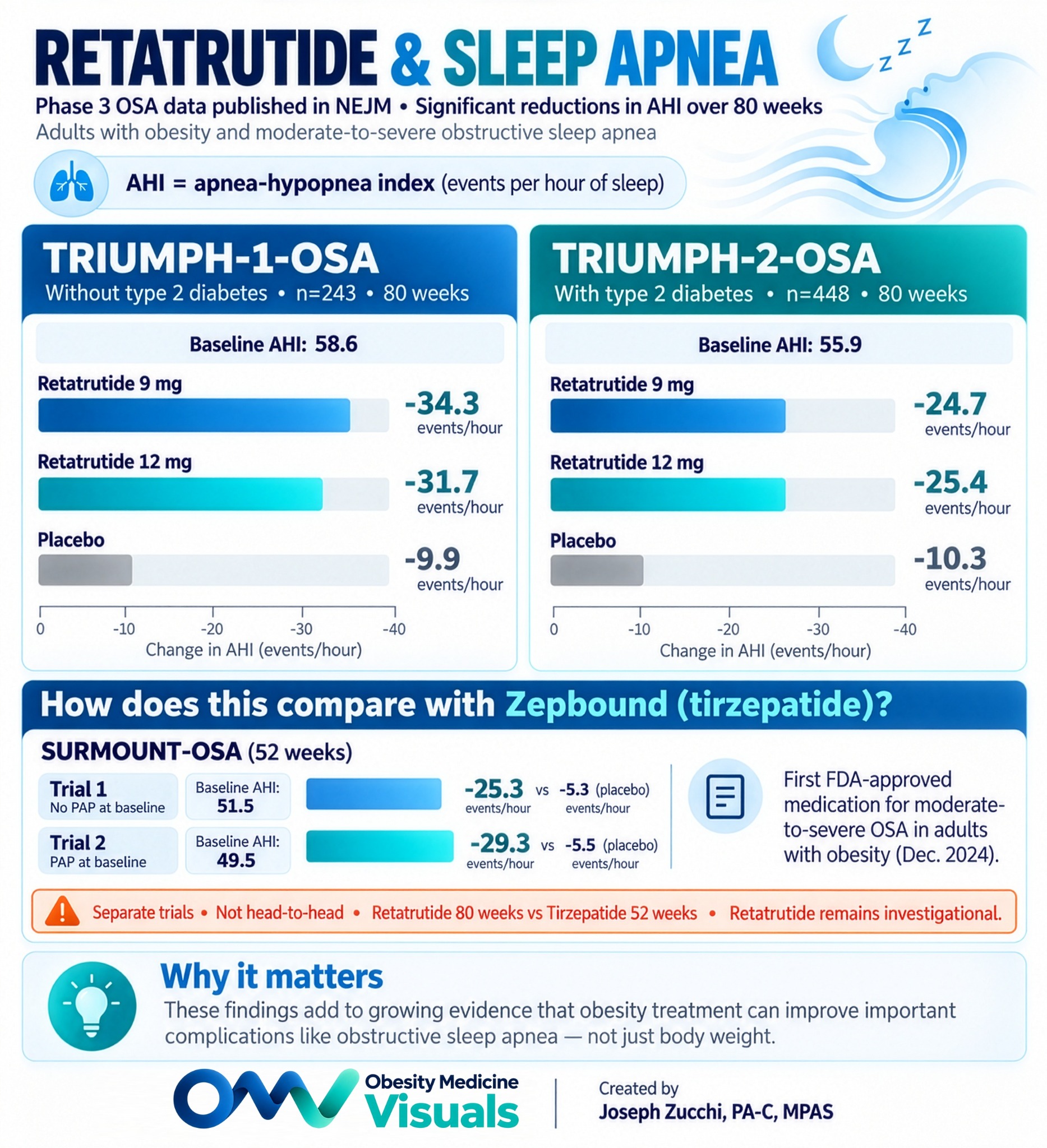
A visual summary of 80-week Phase 3 retatrutide results on apnea-hypopnea index in adults with obesity and moderate-to-severe obstructive sleep apnea, with and without type 2 diabetes.
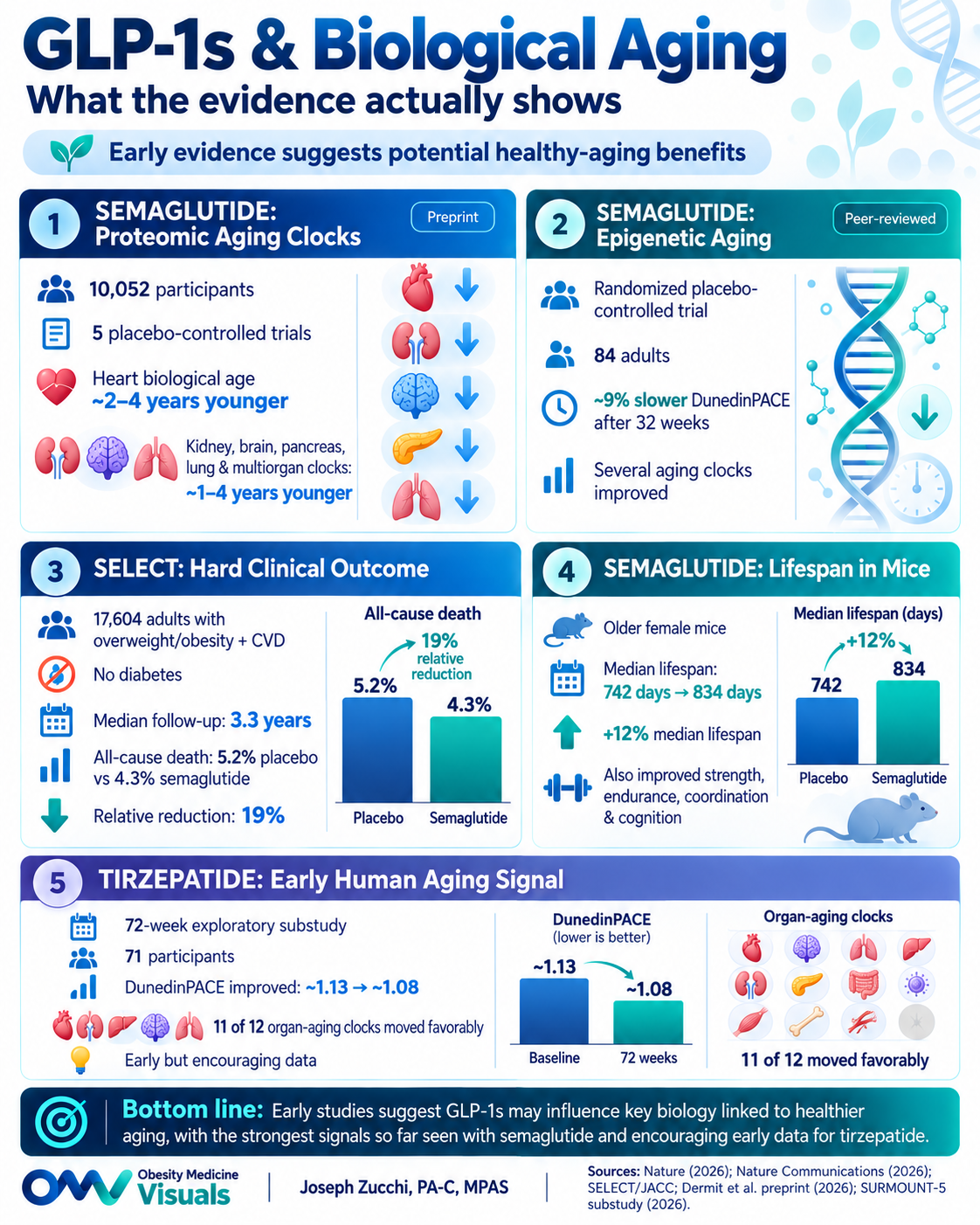
A visual look at semaglutide and tirzepatide aging research, from biological clocks to SELECT mortality and mouse lifespan, with the full LinkedIn post and study context.
When we think about obesity, we need to think about the liver too.
In obesity medicine, we spend a lot of time talking about A1c, blood pressure, cholesterol, cardiovascular risk, and sleep apnea. But liver health still does not get enough attention.
MASLD, or metabolic dysfunction-associated steatotic liver disease, affects 1 in 3 U.S. adults and is especially common in people living with obesity, insulin resistance, and type 2 diabetes.
It is also very underdiagnosed. In one large U.S. analysis, MASLD was identified in less than 1% of patients annually using diagnostic codes.
Visceral and ectopic fat are not just passive energy storage. Dysfunctional adipose tissue contributes to insulin resistance, free fatty acid overflow, and inflammatory signaling. When excess fat accumulates in the liver, it can contribute to steatosis, inflammation, cellular injury, and eventually fibrosis.
MASLD is also not just a liver problem. Cardiovascular disease is the leading cause of death among people with MASLD, which is why liver health needs to be part of the cardiometabolic conversation.
The good news is that screening can be easy.
For many at-risk patients, a simple first step is the FIB-4 score, which uses age, AST, ALT, and platelet count. Current guidance recommends fibrosis risk assessment particularly in patients with type 2 diabetes, overweight or obesity plus another metabolic risk factor, or incidentally identified hepatic steatosis or elevated liver enzymes.
If FIB-4 is elevated, additional noninvasive testing such as FibroScan or an ELF blood test may be appropriate.
This is another reason obesity treatment should go far beyond the number on the scale. We should be thinking about visceral fat, liver fat, cardiovascular risk, glycemic health, muscle preservation, kidney health, and the long-term complications of metabolic disease.
The treatment options for MASH are changing quickly too. Novo Nordisk's Wegovy and Madrigal Pharmaceuticals's Rezdiffra now have FDA-approved indications for adults with noncirrhotic MASH and moderate-to-advanced fibrosis, while investigational therapies including Boehringer Ingelheim's survodutide and Eli Lilly and Company's retatrutide are being studied in late-stage trials.
When we treat obesity, we should not just ask what is happening on the scale. We should also ask what is happening metabolically inside.
For many patients, that should include thinking about the liver.