About this visual
Medication plus lifestyle support, viewed alongside the placebo arms of major trials.
Sources & further reading
Original LinkedIn post and discussion ↗
Additional references appear in the infographic and the original LinkedIn discussion.
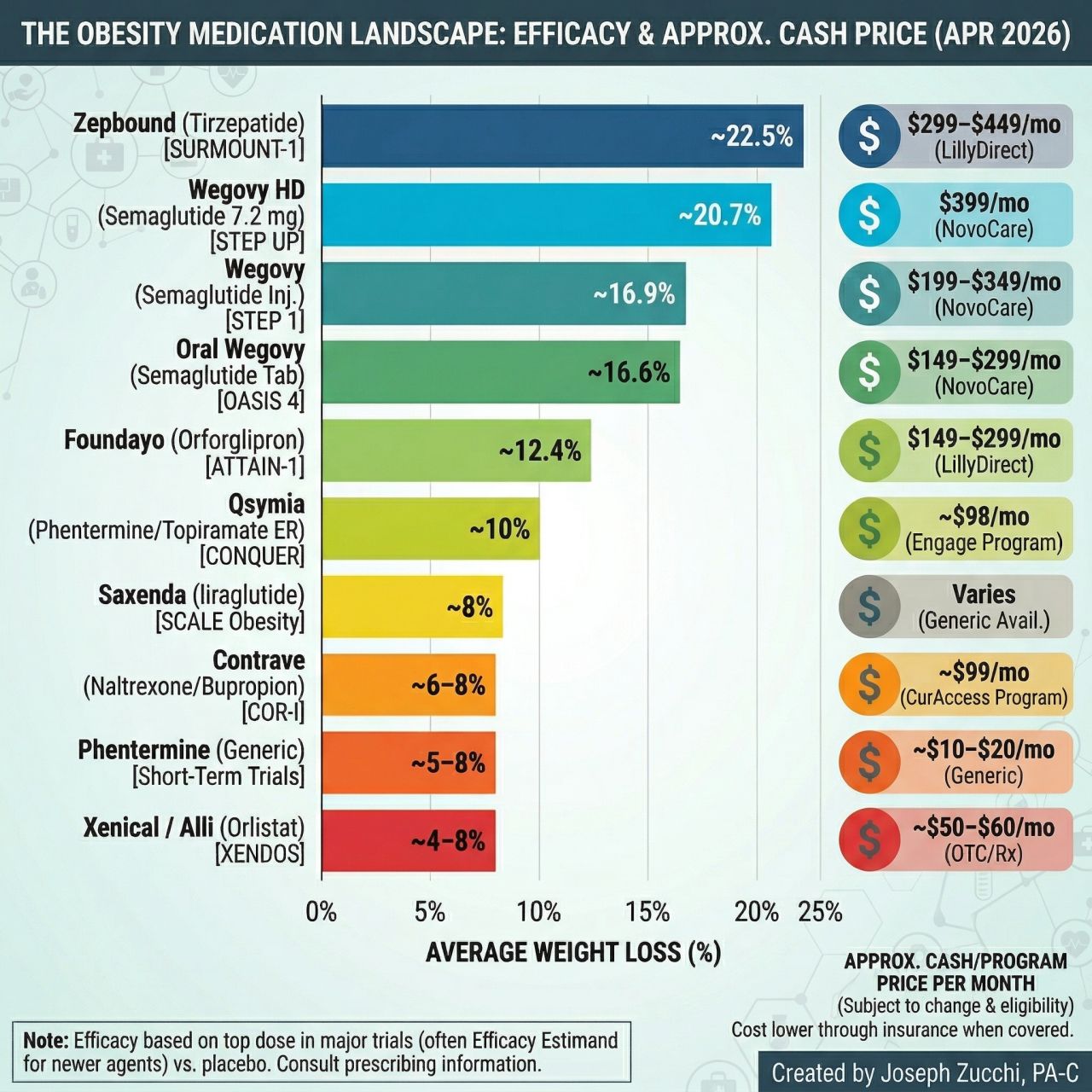
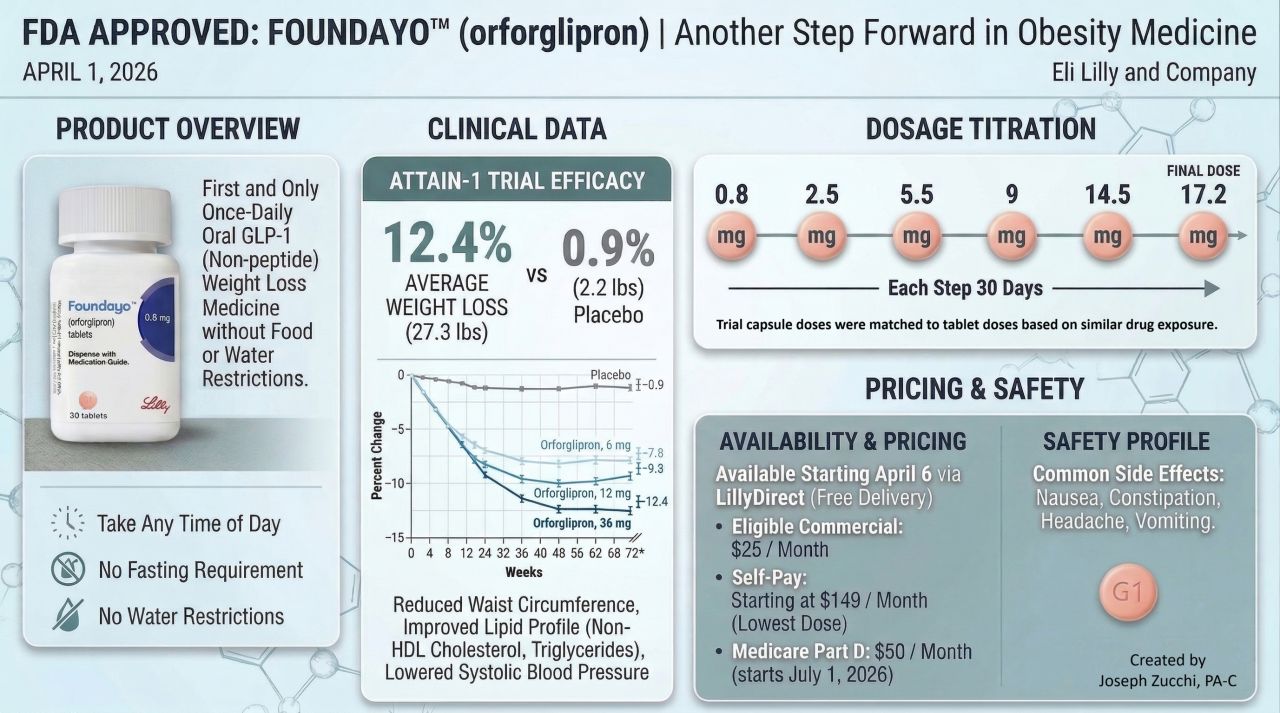
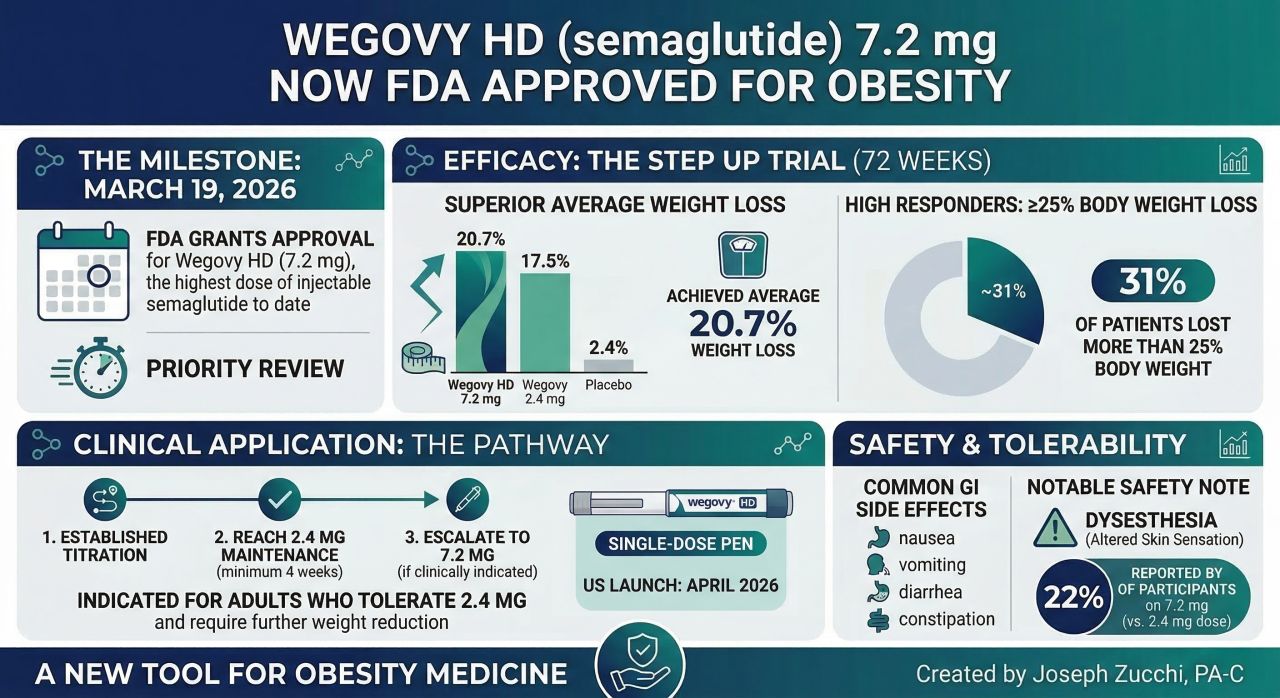
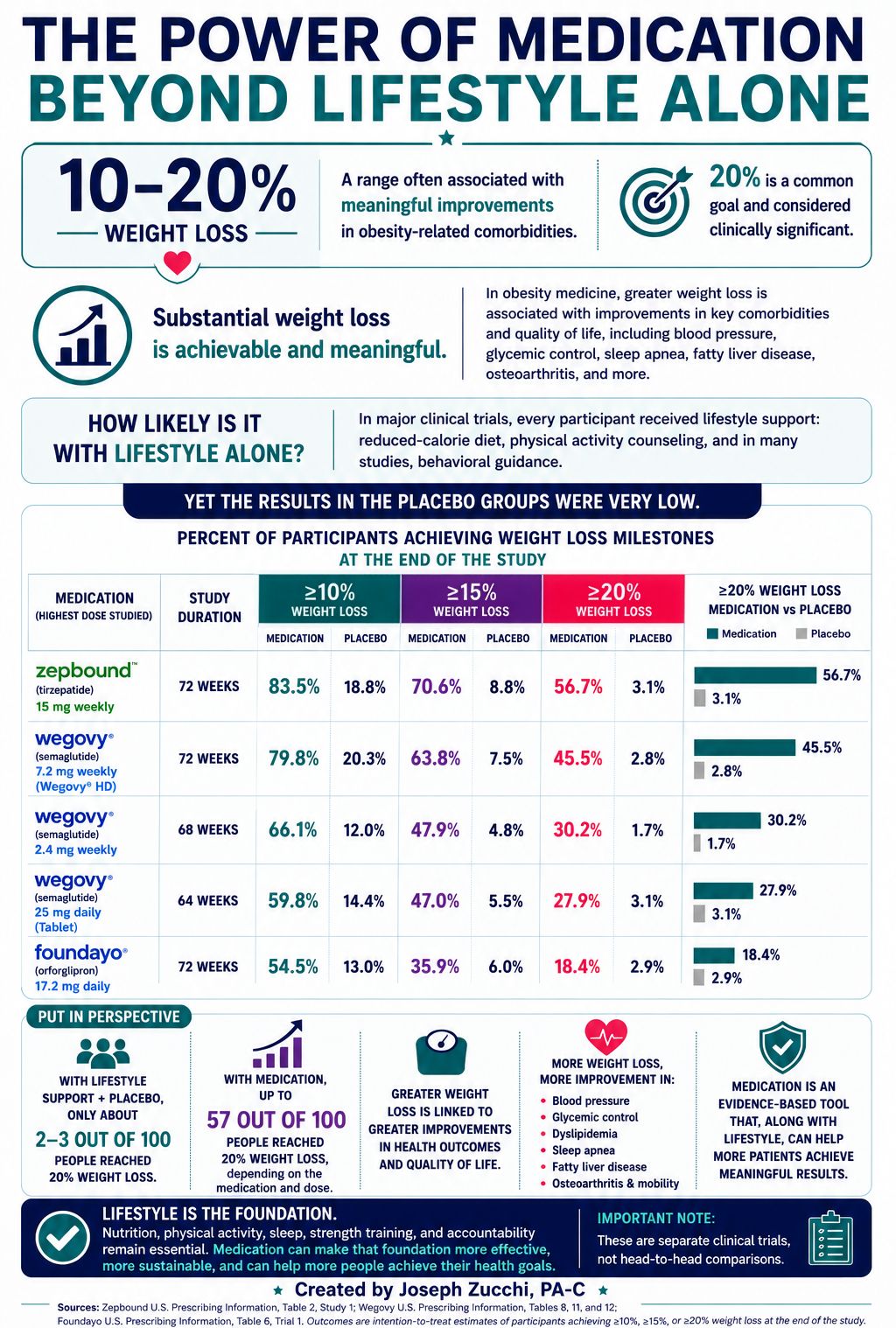
Only 2 to 3 out of every 100 people in major obesity trials achieved 20% weight loss with lifestyle support plus placebo.
That is a statistic I think more clinicians and patients should see.
When a patient says they want to lose 30-50 pounds, they are often talking about 10% to 20% of their starting body weight.
So what does the evidence say about the likelihood of getting there?
The placebo groups in these trials were not doing nothing. Participants received lifestyle support, including reduced-calorie nutrition guidance and physical-activity counseling. Some studies also included behavioral support.
Yet at least 20% weight loss was still uncommon in the lifestyle-support-plus-placebo groups:
• Zepbound: 56.7% reached at least 20% weight loss, versus 3.1% with placebo
• Wegovy HD: 45.5% versus 2.8%
• Wegovy injection: 30.2% versus 1.7%
• Wegovy tablet: 27.9% versus 3.1%
• Foundayo: 18.4% versus 2.9%
This is not a direct head-to-head comparison between medications. These were separate trials with different populations. But the message is clear.
For people hoping to lose a substantial amount of weight, lifestyle support alone often does not provide the same odds as lifestyle support combined with medication.
That does not make nutrition, exercise, sleep, strength training, or accountability any less important. They remain essential parts of obesity care.
Medication is not a replacement for lifestyle treatment. For many people, it is the tool that helps make lifestyle changes more sustainable and gives them a more realistic chance of reaching clinically meaningful weight-loss goals.
This is what evidence-based obesity care should look like: honest expectations, individualized treatment, and access to every appropriate tool.