About this visual
Joe examines real-world tirzepatide data and the limits of a cost comparison.
Sources & further reading
Original LinkedIn post and discussion ↗
Additional references appear in the infographic and the original LinkedIn discussion.

Originally posted Aug 2026 · By Joe Zucchi, PA-C, MPAS
1280 × 1599 px · PDF includes the original image and a link to this page.
Joe examines real-world tirzepatide data and the limits of a cost comparison.
Original LinkedIn post and discussion ↗
Additional references appear in the infographic and the original LinkedIn discussion.
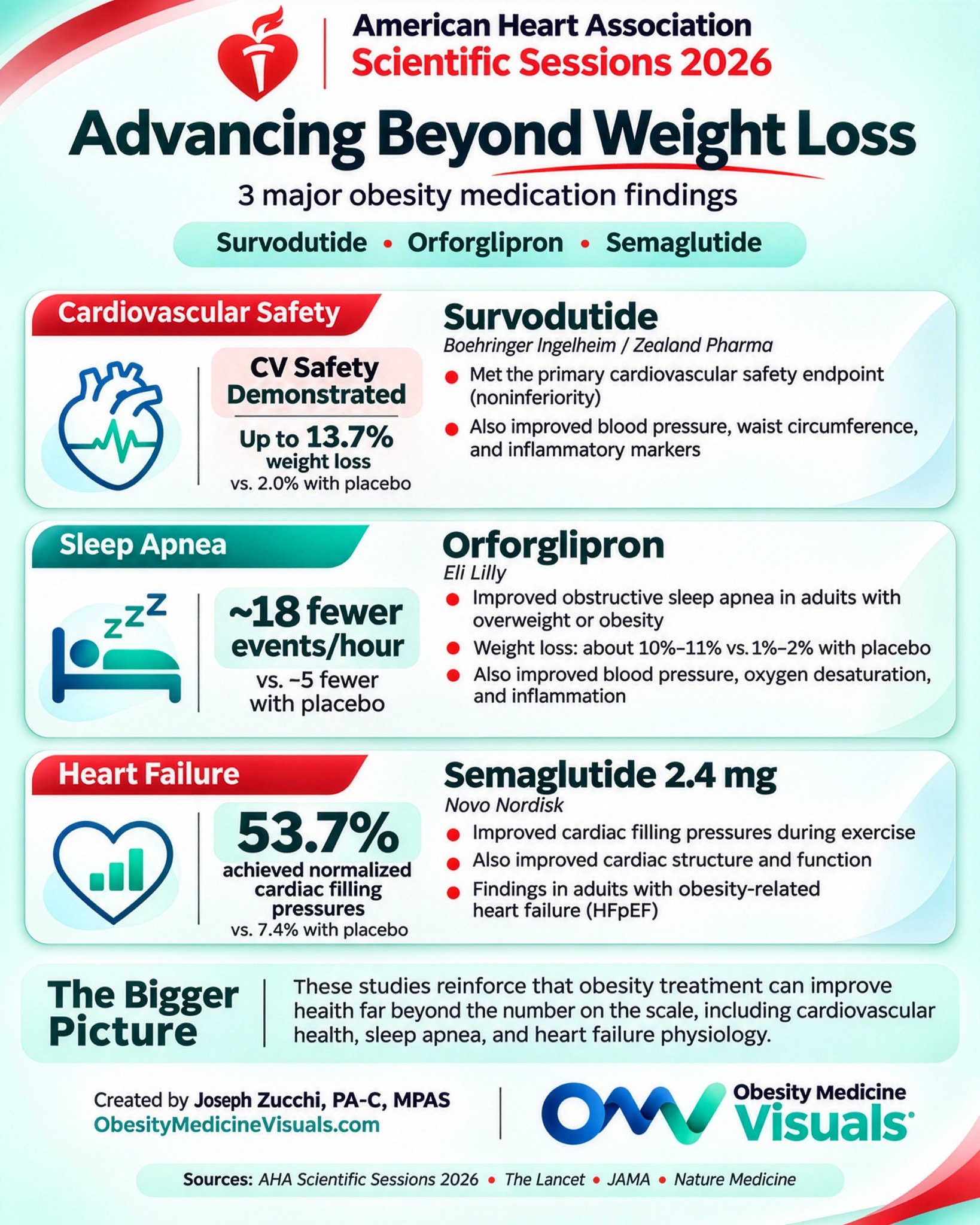
Three obesity medication findings from AHA Scientific Sessions 2026: survodutide and cardiovascular safety, orforglipron and sleep apnea, and semaglutide and obesity-related heart failure.
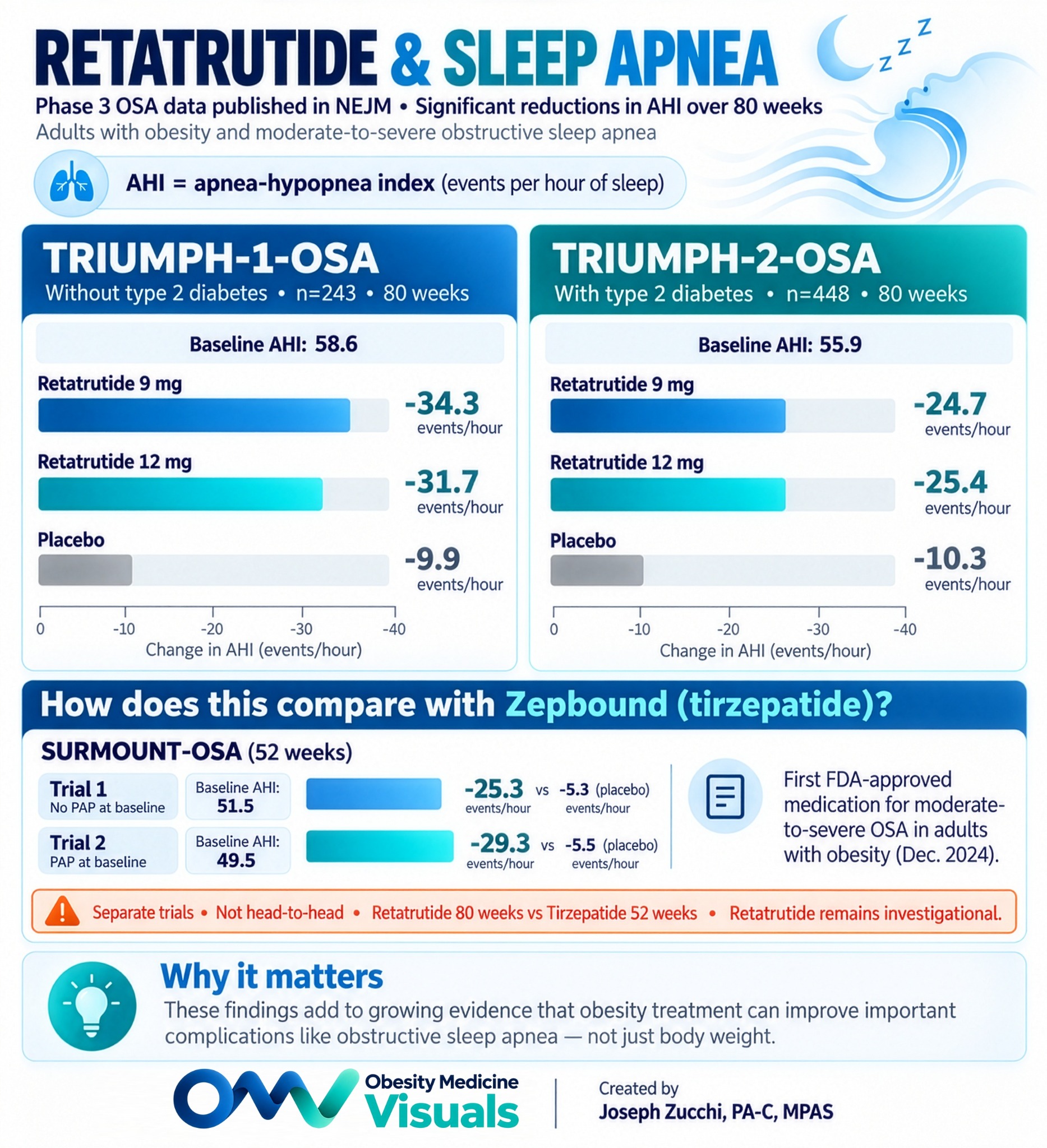
A visual summary of 80-week Phase 3 retatrutide results on apnea-hypopnea index in adults with obesity and moderate-to-severe obstructive sleep apnea, with and without type 2 diabetes.
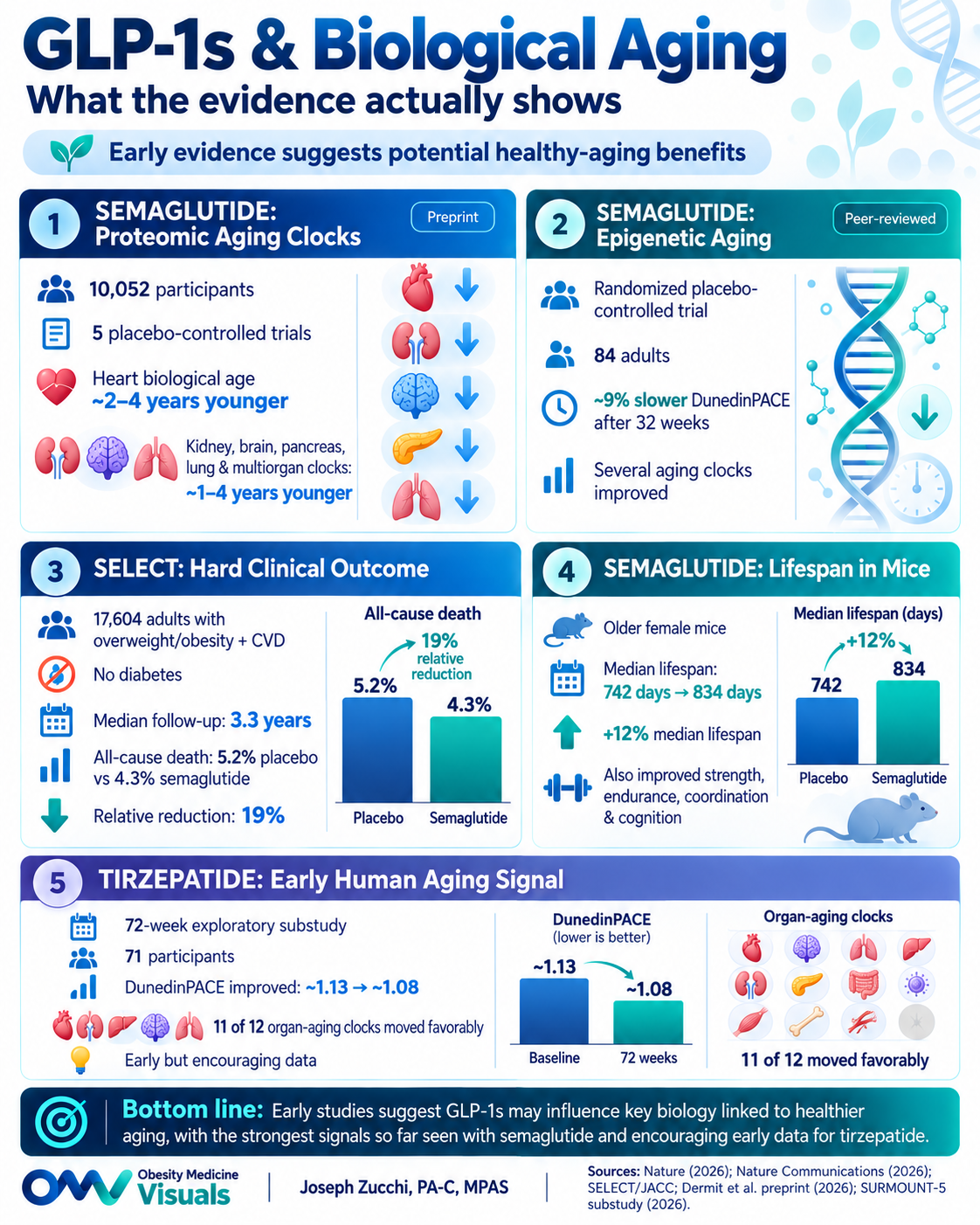
A visual look at semaglutide and tirzepatide aging research, from biological clocks to SELECT mortality and mouse lifespan, with the full LinkedIn post and study context.
What if covering obesity medications actually lowers healthcare costs?
A new real-world study published this week gives us some interesting data at a time when access to obesity medications is still moving in the wrong direction.
Starbucks is ending coverage for GLP-1 medications used for weight management, PepsiCo has announced a similar change for some employees, and employer coverage overall has been declining. Medicaid access remains especially limited. And currently only 12 state Medicaid programs cover GLP-1 medications for obesity.
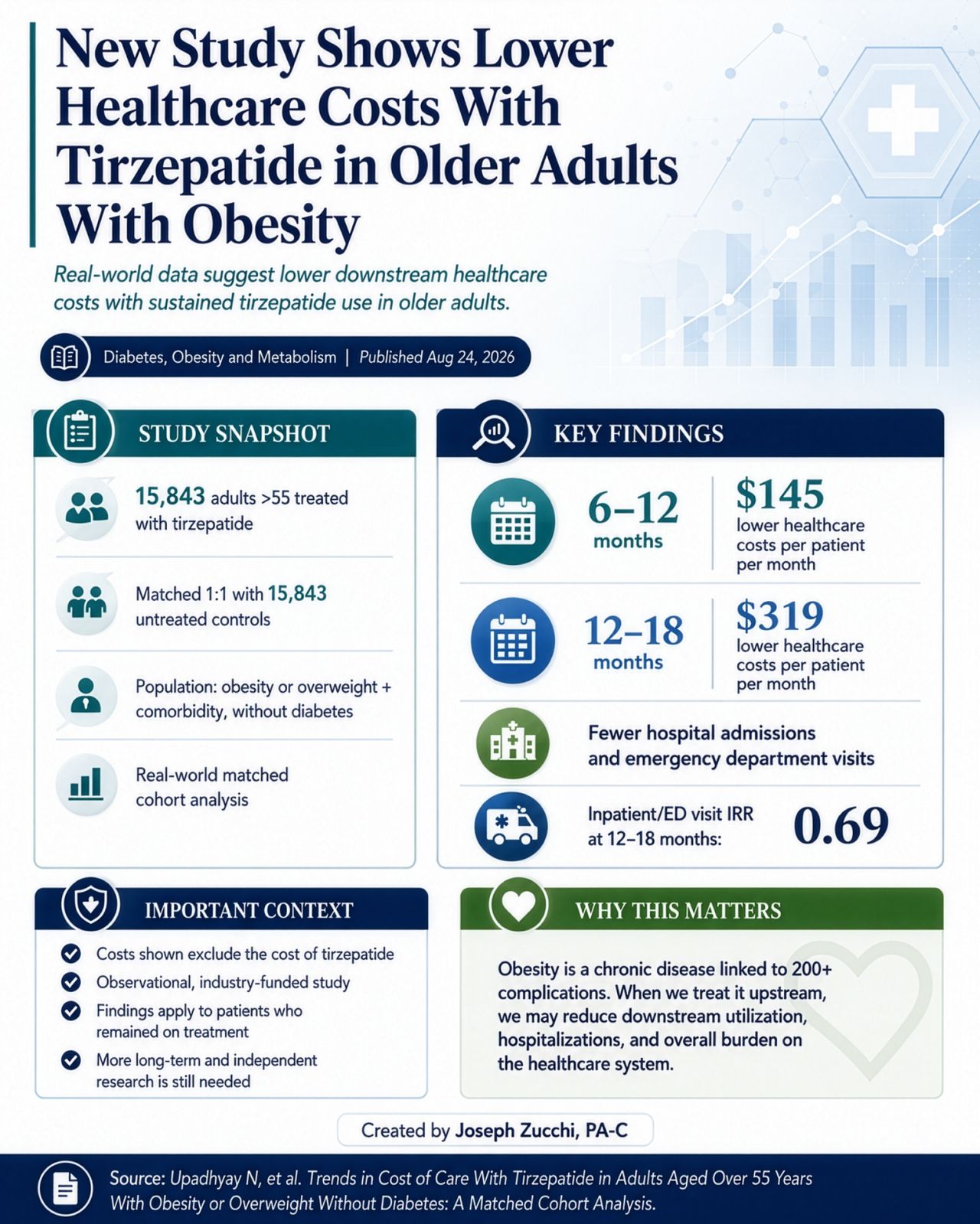
The new study looked at 15,843 adults over age 55 who remained on Zepbound (tirzepatide) for obesity treatment and matched them with 15,843 untreated controls.
Healthcare costs, not including the cost of Zepbound itself, were lower in the treated group:
• $145 less per patient per month at 6–12 months
• $319 less per patient per month at 12–18 months
They also had fewer hospital admissions and emergency department visits.
This is particularly relevant with the new Medicare GLP-1 Bridge. The negotiated price is $245 per month, with a $50 patient copay, leaving Medicare with a net cost of about $195 per month.
So in this study (link in comments), the healthcare cost difference seen by 12–18 months was actually greater than Medicare's current monthly cost for the medication.
That does not mean one observational, industry-funded study proves Zepbound will save every health plan money. The medication cost was excluded from the healthcare cost analysis, the results apply to people who stayed on treatment, and we need longer-term and independent data. But I think this is exactly the kind of research we need more of.
Obesity is a chronic disease associated with more than 200 diseases and complications. When we talk about the cost of these medications, we also have to consider the cost of cardiovascular disease, diabetes, sleep apnea, liver disease, kidney disease, osteoarthritis, hospitalizations, and everything else that comes downstream.
And now that we are seeing much lower negotiated pricing through Medicare, there is clearly room for employers, commercial insurers, Medicaid programs, manufacturers, and policymakers to keep working toward coverage models that are actually sustainable.
There is a cost to treating obesity.
There is also a very real cost to not treating it.