
About this visual
A visual about the widening gap between improving obesity treatments and shrinking coverage, with examples of employer and plan changes and an October 18 state-by-state Medicaid review.
Sources & further reading
Coverage policies vary by state, employer, and plan and can change. The independent October 18, 2026 state-by-state review is cited in the original post; verify current coverage and eligibility with the relevant program or plan.
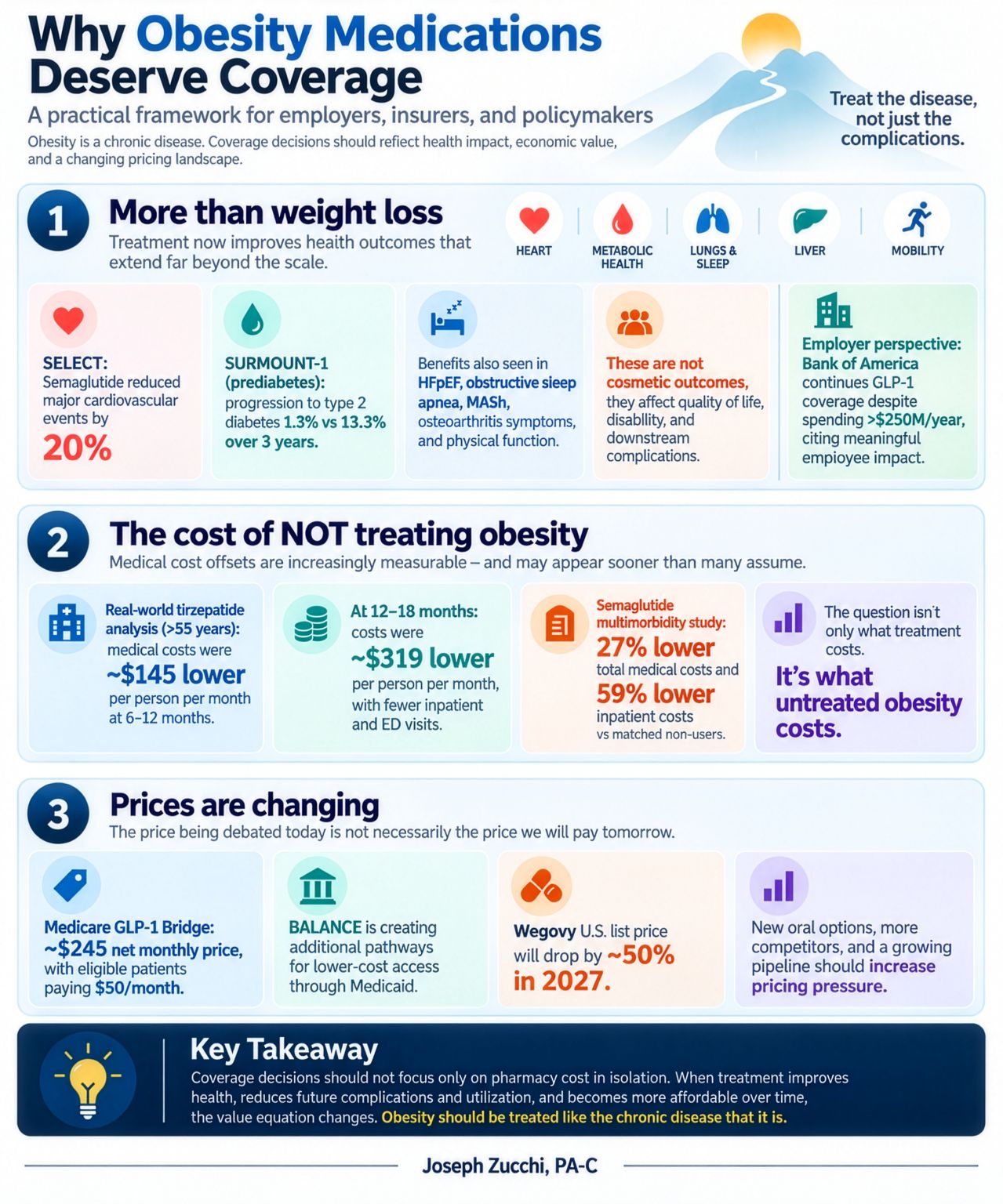
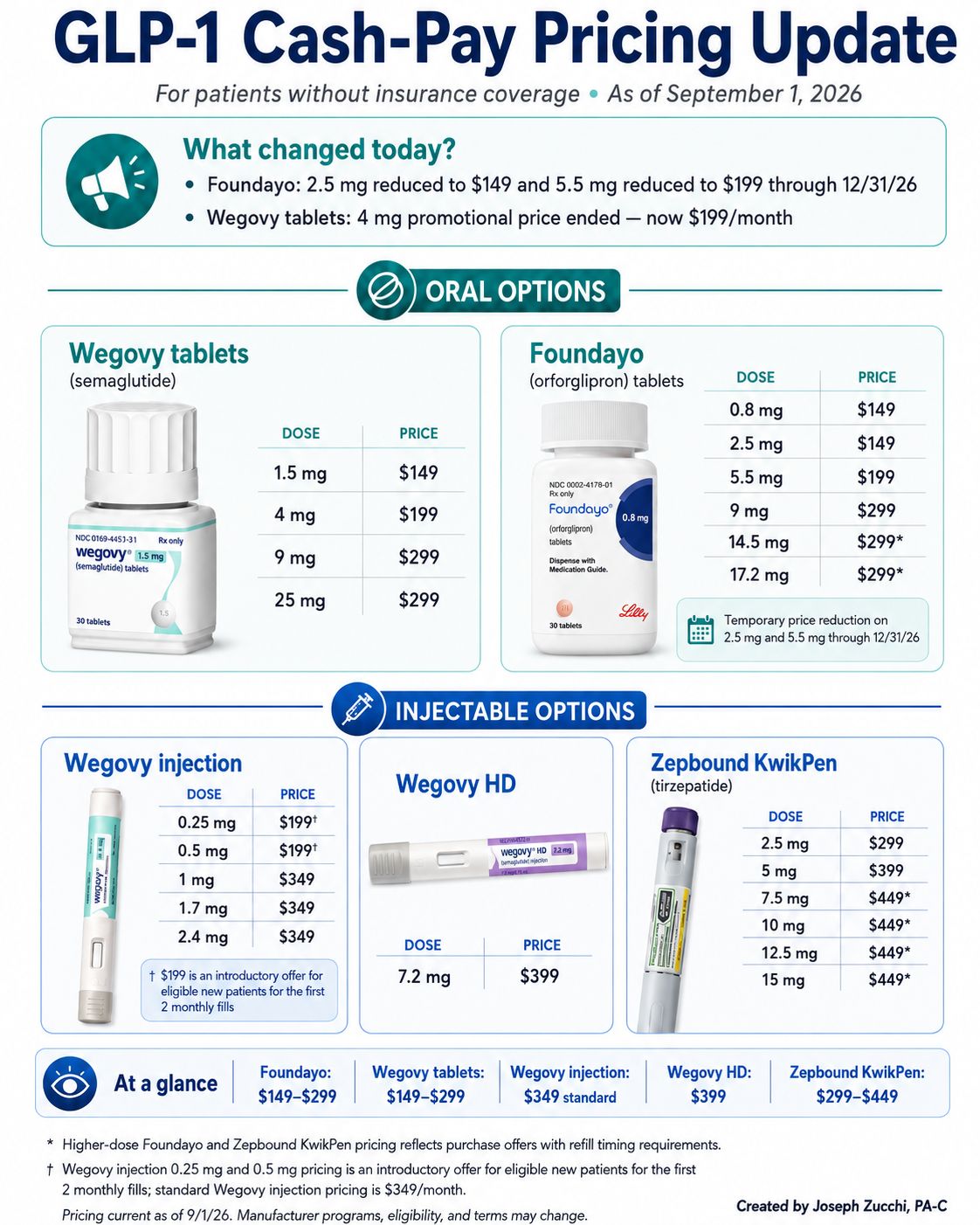
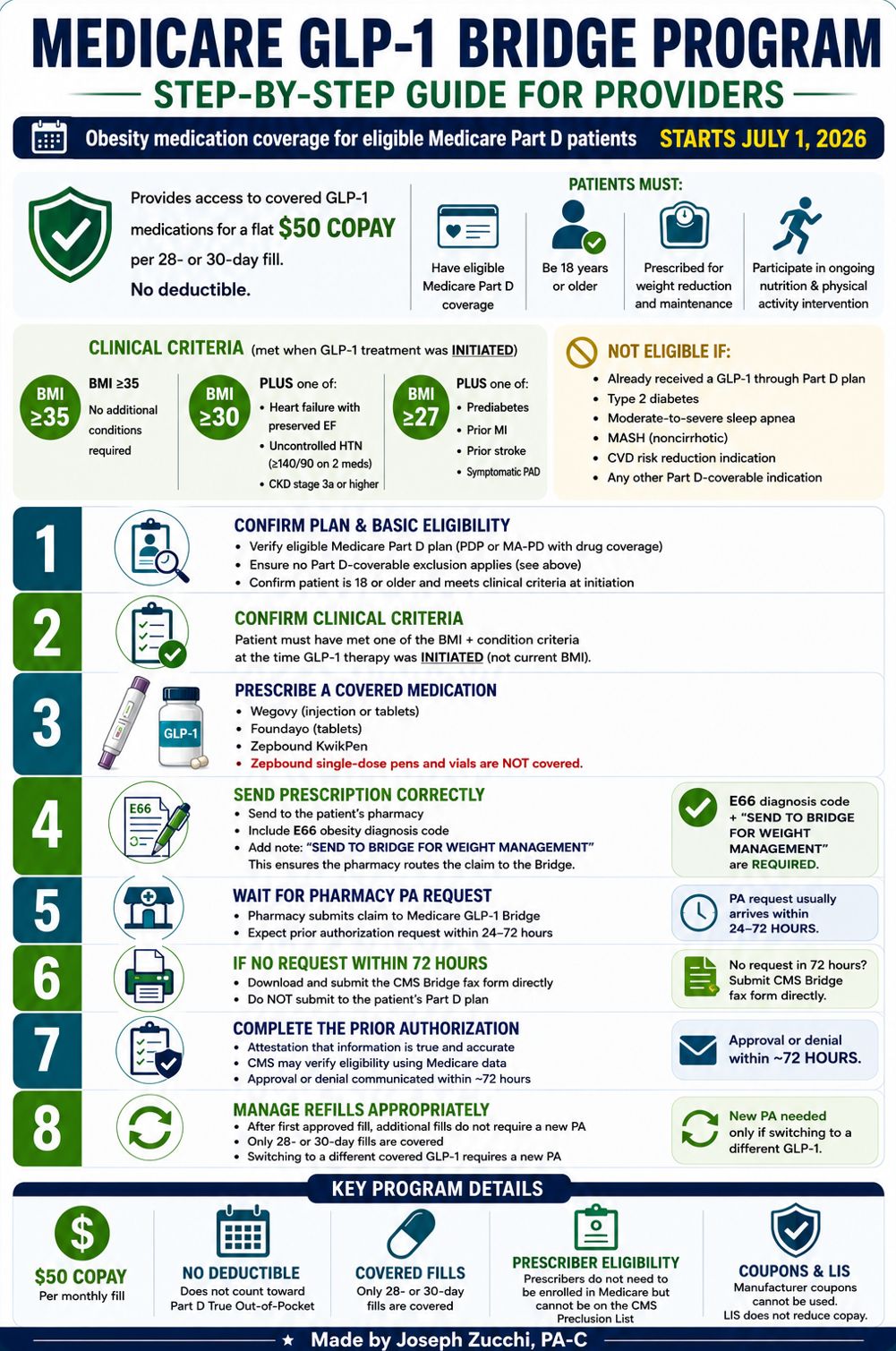
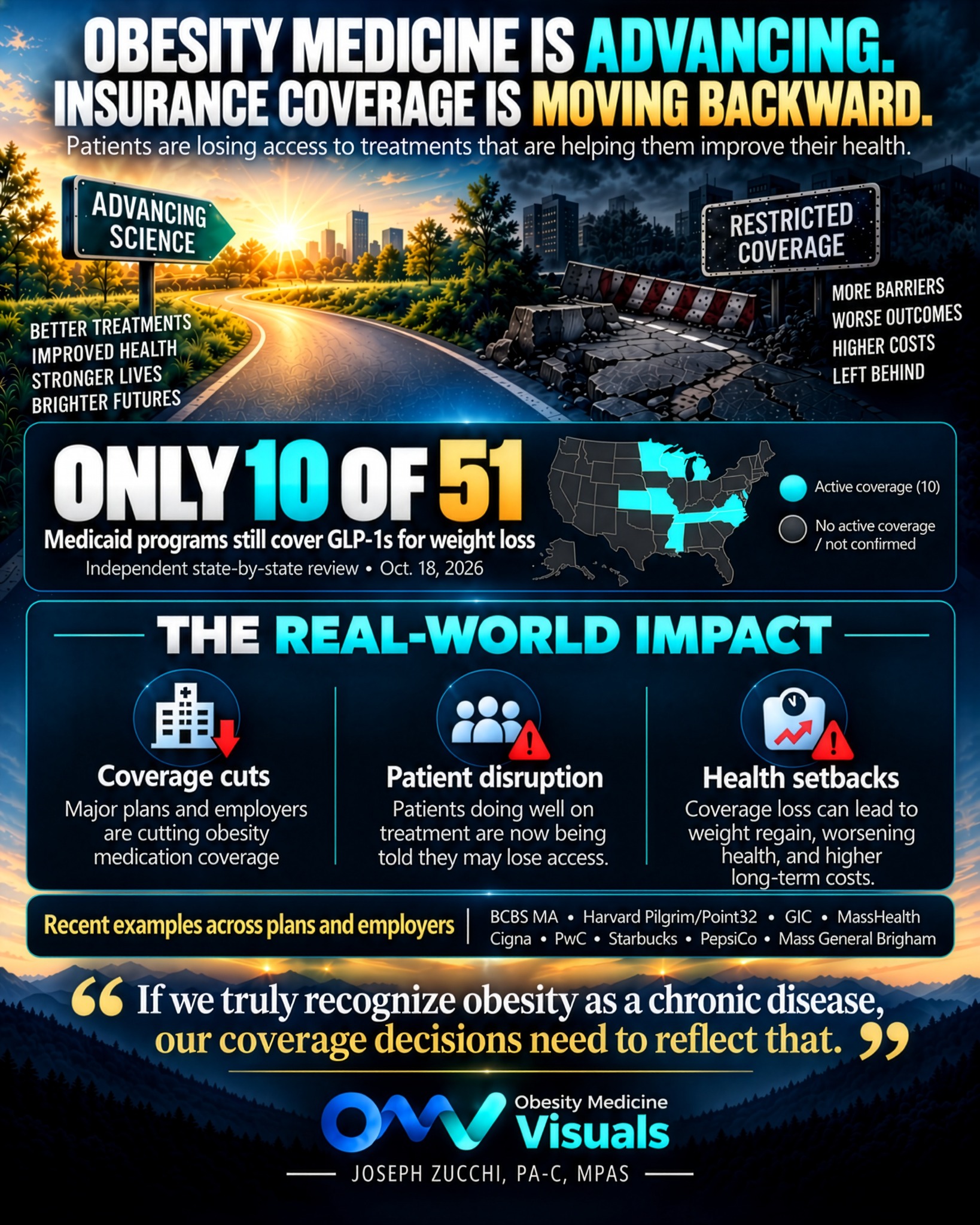
2026 has been a devastating year for insurance coverage of obesity medications. And the coverage losses just keep coming.
Yesterday, I had more difficult conversations with patients who are doing incredibly well on treatment but have been told their medications won't be covered starting in January.
As an obesity medicine clinician, these are some of the most frustrating conversations I have. We're helping people improve their health, and then we're forced to discuss how they might lose the very treatment that's working.
And it's happening across the country.
🔹 Cigna, PwC, Starbucks, and PepsiCo eliminated obesity GLP-1 benefits for affected employees.
🔹 Medicaid programs in California, New Hampshire, Pennsylvania, South Carolina, Massachusetts, and Rhode Island have ended or significantly restricted obesity GLP-1 coverage.
🔹 BCBS Massachusetts and Harvard Pilgrim/Point32Health restricted obesity medication coverage across affected plans.
🔹 Massachusetts GIC and MassHealth cut coverage for obesity medications.
🔹 Mass General Brigham is removing weight-management medications from the standard pharmacy benefit for affected employees in January 2027, although separate partial financial assistance will be available to eligible employees.
An independent state-by-state review dated October 18 found that only 10 of 51 Medicaid programs still covered GLP-1 medications for weight loss.
And some plans aren't just excluding expensive GLP-1s. They're even excluding older, less expensive treatments like phentermine.
When you remove coverage for nearly every medication used to treat obesity, this is no longer just a debate about the price of GLP-1s. We're shutting the door on medical treatment for an entire chronic disease.
Obesity is linked to more than 200 health conditions. We have better evidence and more effective treatments than ever, yet access keeps moving backward.
And these decisions have consequences. Patients who stop treatment will regain weight and lose many of the health improvements they worked so hard to achieve. Saving money on a pharmacy benefit today doesn't necessarily mean saving money on healthcare in the long run.
I understand that costs are real. But this doesn't have to be all or nothing. Adjust copays. Set different clinical criteria. Negotiate on pricing. Cover lower-cost options. Protect patients already succeeding on treatment. And stop focusing only on what these medications cost today without considering how much money could be saved by preventing the serious health problems related to obesity down the road.
It's heartbreaking to see patients improve their health, only to have access end because their employer or insurer changed a benefit.
If we truly recognize obesity as a chronic disease, our coverage decisions need to reflect that.
#obesitymedicine #glp1 #patientadvocacy