
About this visual
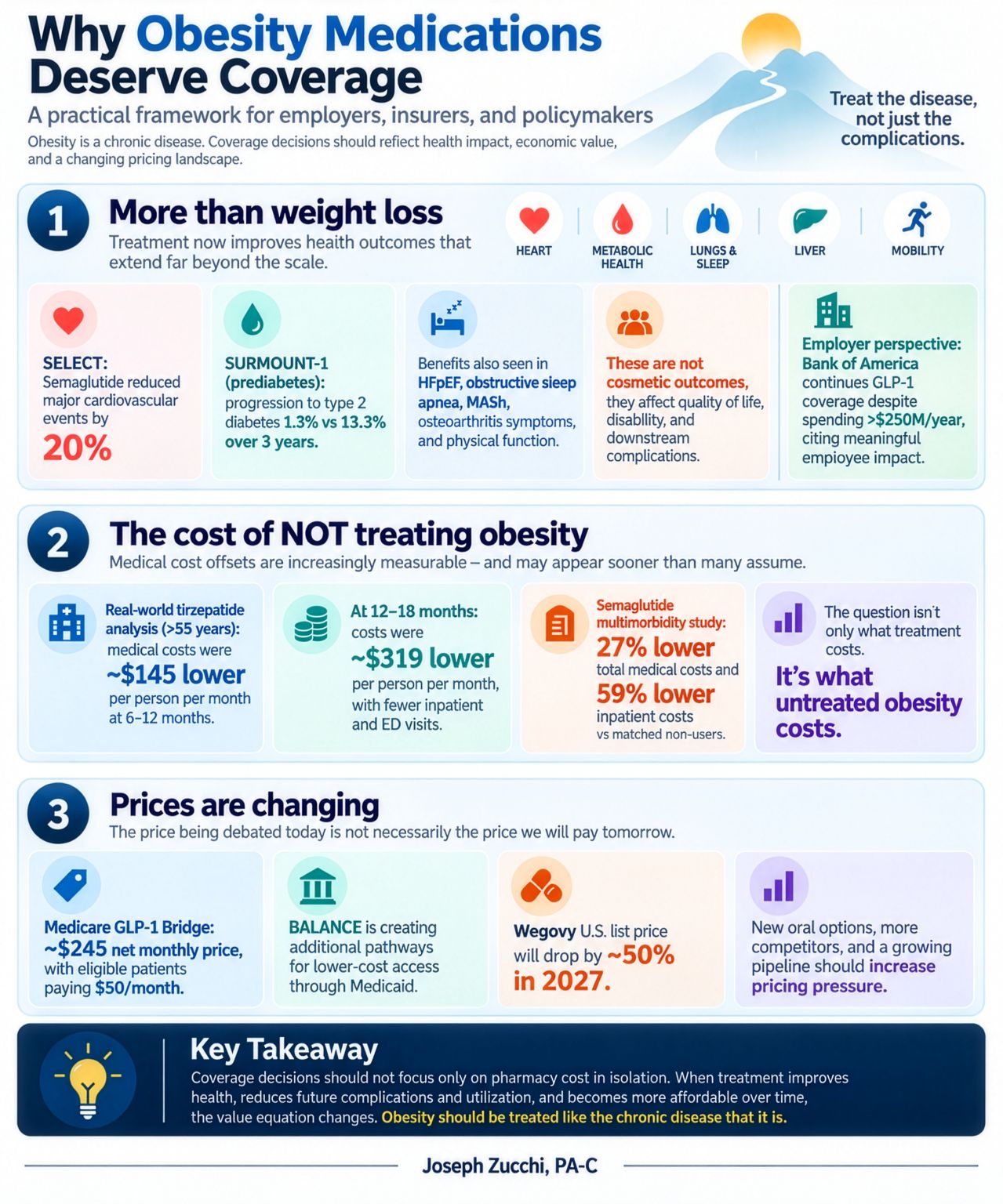
A three-part visual case for coverage: clinical outcomes beyond weight, the costs of untreated obesity, and a changing price and access landscape.
Sources & further reading
Studies and program information: SELECT: semaglutide cardiovascular outcomes in obesity (NEJM) ↗
Studies and program information: SURMOUNT-1 extension: tirzepatide and diabetes prevention (NEJM) ↗
Studies and program information: Tirzepatide medical-cost cohort analysis (PubMed) ↗
Studies and program information: Semaglutide medical-cost cohort analysis (PubMed) ↗
Studies and program information: Medicare GLP-1 Bridge program information (CMS) ↗
Clinical trial results apply to their study populations. Economic comparisons are observational and do not establish savings for every patient or payer; drug acquisition costs may be excluded. Pricing and program rules are a September 2026 snapshot; verify current details.
I spend a lot of time advocating for better access to obesity treatment, and one argument comes up over and over:
“These medications are too expensive to cover.”
Today I’ll be at Obesity Science & Innovation USA in Boston, speaking on the keynote panel about pricing, reimbursement, and access to obesity therapeutics. It felt like a good time to put together these three important points.
1️⃣ This is about much more than weight loss.
Obesity is a chronic disease, and we now have outcomes data showing benefits that go far beyond the scale.
Semaglutide reduced major cardiovascular events by 20% in SELECT.
Among participants with obesity and prediabetes in SURMOUNT-1, progression to type 2 diabetes over three years was 1.3% with tirzepatide compared with 13.3% with placebo.
We’re also seeing improvements in heart failure, obstructive sleep apnea, MASH, osteoarthritis symptoms, physical function, and other obesity-related complications.
These aren’t cosmetic outcomes. They affect morbidity, quality of life, disability, healthcare utilization, and long-term health.
2️⃣ We also need to look at the cost of not treating obesity.
A recent real-world tirzepatide analysis found medical costs were about $145 lower per person per month at 6–12 months and $319 lower at 12–18 months, along with fewer inpatient and ED visits.
Another real-world semaglutide study in people with obesity and multimorbidity found 27% lower total medical costs and 59% lower inpatient costs compared with matched non-users.
That doesn’t mean every medication immediately pays for itself. But it does show that the downstream savings may start showing up sooner than many people think.
The question isn’t only what treatment costs. It’s what untreated obesity costs.
Monica Billger, MPP from the American Diabetes Association made a great point in one of our recent advocacy discussions: we spend enormous amounts treating downstream complications with band-aids while hesitating to invest in treating the root cause upstream, which is obesity itself.
3️⃣ Prices are changing.
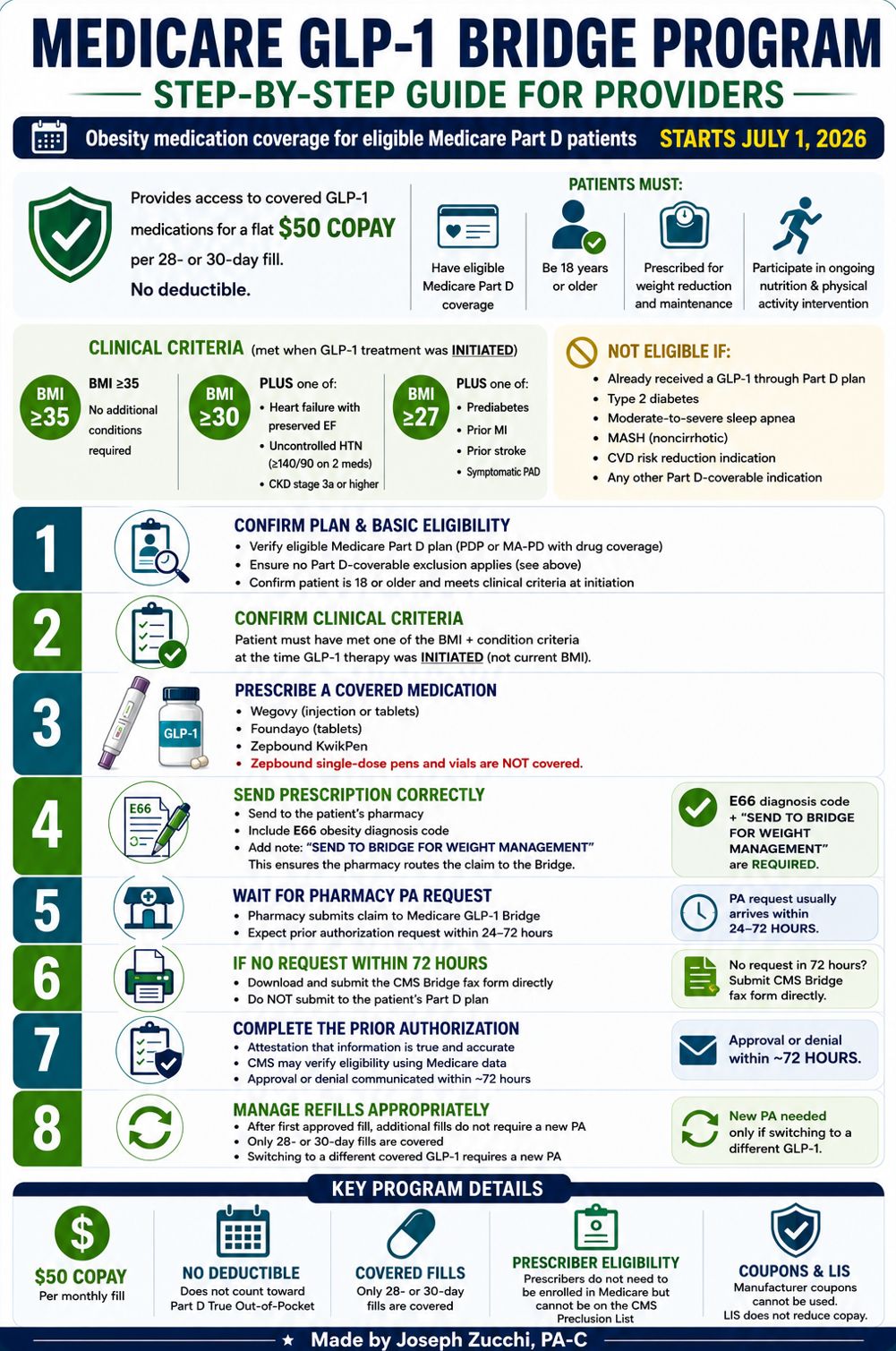
The Medicare GLP-1 Bridge is already using a negotiated net price of about $245 per month.
CMS’s BALANCE model is creating additional pathways for lower-cost access through Medicaid.
Wegovy’s U.S. list price is set to fall by roughly 50% in 2027.
And with new oral therapies, more competitors, and a big pipeline, I think the pricing conversation is going to look very different over the next few years.
Covering obesity medications is still an expense.
But if treatment can reduce cardiovascular events, prevent diabetes, improve sleep apnea, heart failure, liver disease and mobility, reduce healthcare costs, and become more affordable over time, then looking only at the pharmacy spend misses a big part of the picture.
Obesity is a chronic disease. Our coverage policies should treat it like one.
#ObesityMedicine #Obesity #GLP1 #HealthcareAccess #HealthPolicy #EmployeeBenefits #CardiometabolicHealth