
About this visual
A 2026 pharmacy-benefit survey highlights the gap between GLP-1 coverage for diabetes and obesity, including a 49% response among plans excluding obesity treatment.
Sources & further reading
Further reading: PSG 2026 Trends in Drug Benefit Design report ↗
Further reading: PSG report announcement and survey context ↗
Survey of 237 benefit leaders; the 49% denominator is respondents whose plans excluded obesity GLP-1 coverage. This describes reported coverage attitudes, not a clinical outcome.
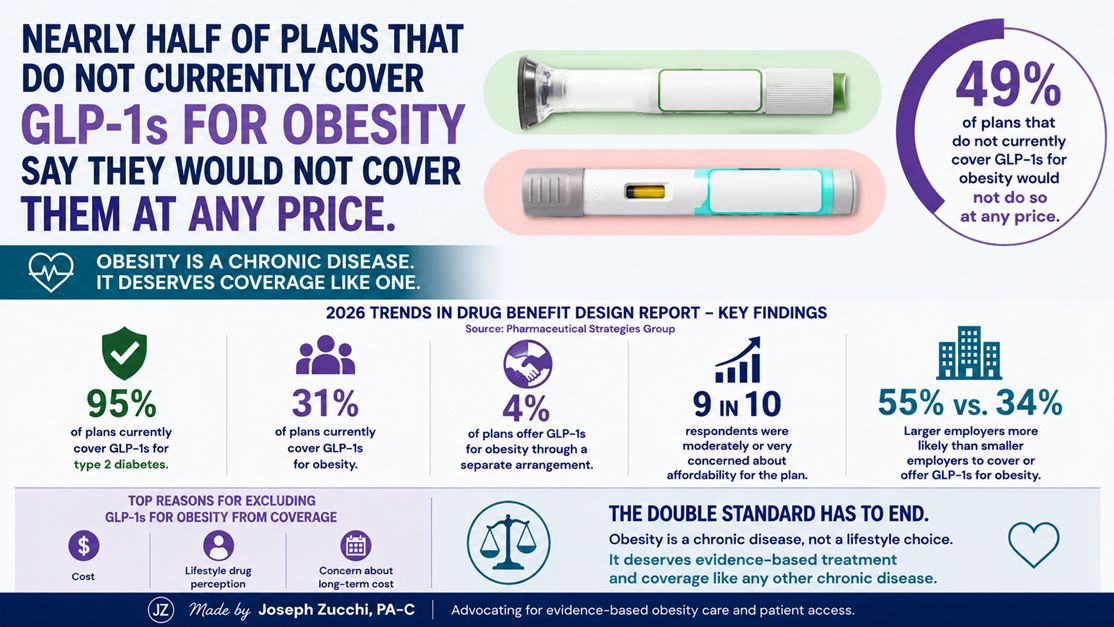
Nearly half of plans that do not currently cover GLP-1 medications for obesity say they would not cover them at any price.
That statistic stopped me in my tracks.
A new Pharmaceutical Strategies Group report, highlighted in Forbes, found that:
• 95% of plans currently cover GLP-1 medications for type 2 diabetes
• Only 31% currently cover GLP-1s for obesity
• Another 4% offer them for obesity through a separate arrangement
• 49% of plans that do not currently cover GLP-1s for obesity said they would not do so at any price
• 9 in 10 respondents were moderately or very concerned about affordability for the plan
• Among plans excluding obesity coverage, the top reasons were cost, labeling these medications as “lifestyle drugs,” and concern about the long-term cost of ongoing therapy
• Larger employers were more likely than smaller employers to cover or offer GLP-1s for obesity, 55% vs. 34%
How sad is that?
Yes, cost matters. Employers and health plans are dealing with budget pressure. I do not think anyone is saying these medications should be used without appropriate criteria, follow-up, or clinical oversight.
But when 95% of plans cover this medication class for type 2 diabetes, while only 31% cover it for obesity, we have to be honest about what is happening.
Obesity is still being treated differently.
And whether people want to admit it or not, stigma and weight bias are still influencing how this disease is viewed, discussed, and covered.
We say we want to prevent diabetes, heart disease, sleep apnea, fatty liver disease, kidney disease, hypertension, joint pain, and disability. But then many plans refuse to cover evidence-based treatment for one of the major chronic diseases driving so many of those conditions in the first place.
The report also points to concerns about discontinuation rates and weight regain. But that should not be used as a simple excuse to deny coverage.
Some discontinuation data comes from a time when shortages were a real issue. Some patients stop because of cost. Some stop because they lose coverage. And yes, some stop because of side effects or personal choice.
But high discontinuation does not prove obesity medications are ineffective. It proves that obesity requires long-term, comprehensive care, and that access matters.
When blood pressure goes back up after stopping blood pressure medication, we do not say the medication failed.
But when weight returns after stopping obesity medication, patients are blamed, and coverage is too often taken away.
That double standard needs to end.
The solution is not unlimited access without structure. The solution is thoughtful, evidence-based coverage paired with comprehensive obesity care: appropriate clinical criteria, nutrition support, behavioral care, physical activity guidance, medication management, and long-term follow-up.
Obesity is a chronic disease. It deserves coverage like one. Patients deserve better than “not at any price.”